For All We Know: Villanelle

Day 11 Poem-a-Day Challenge

Although we were given the opportunity to write a “loose” villanelle today, I went with the traditional rhyme scheme. You will find the rules for this form linked below, courtesy of the Academy of American poets.

Rules of the Villanelle Form (from Academy of American Poets @ https://poets.org)

From NaPoWriMo, my favorite poem-a-day challenge website, Maureen Thorson offered this optional prompt: “Take a look at Kyle Dargan’s “Diaspora: A Narcolepsy Hymn.” This poem is a loose villanelle that uses song lyrics as its repeating lines (loose because it doesn’t rhyme).  Your challenge is, like Dargan, to write a poem that incorporates song lyrics – ideally, incorporating them as opposing phrases or refrains.”

From Nina Simone’s Song “For All We Know” from NinaSimone.com

This might only be a dream *first refrain
Like the ripples, like the ripples in the stream *second refrain

Villanelle: A1 b A2 / a b A1 / a b A2 / a b A1 / a b A2 / a b A1 A2.

Where Trains Go

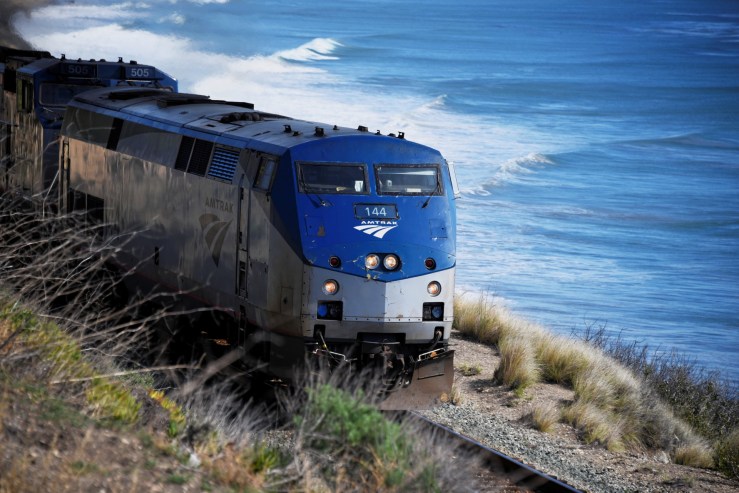
Like a train a track that stretches ahead, the days blur by and we are now on Day 9 of the April poem-a-day challenge, chugging away toward the middle of the month. Below is the optional prompt from Maureen at the NaPoWriMo poetry site. This prompt is all about Rhyme & Sound which brought to my mind, a train ride.

And here’s our optional prompt for the day. Like music, poetry offers us a way to play with and experience sound. This can be through meter, rhyme, varying line lengths, assonance, alliteration, and other techniques that call attention not just to the meaning of words, but the way they echo and resonate against each other. For a look at some of these sound devices in action, read Robert Hillyer’s poem, Fog. It uses both rhyme and uneven line lengths to create a slow, off-kilter rhythm that heightens the poem’s overall ominousness. Today we’d like to challenge you to try writing a poem of your own that uses rhyme, but without adhering to specific line lengths. For extra credit, reference a very specific sound, like the buoy in Hillyer’s poem.” Maureen Thorson

Thank you for visiting Poet Voice!

Jacquelyn ~

Begin Again!

Begin again. The law is clear

As geologic ages rear

     Through curling heat and stiffening cold,

     Lost ocean or fresh land unrolled,

We see the new forms still appear.

Nature’s best method triumphs here;

She builds not in one column sheer,

     But birth on birth as beads are told

     New life we find, rebuilt from old,

                  Begin again.

Each new day blossoms from the bier

Of night forgotten. Have no fear—

     Let us, who are the world, be bold,

     Take hope once more, take heart, take hold

Rise now with the new risen year—

                  Begin again.

Charlotte Perkins Gilman


As we embark on the “unwritten pages of the new,” I draw on the optimism of the the writer, poet, activist, lecturer, artist, and ever industrious, Charlotte Perkins Gilman–who continues to inspire me today.

So much did she inspire me when I first discovered her large body of work that I spent another several decades collecting the poetry that was nearly inaccessible before my book (cover below). Now available at scattered US universities, such as Harvard, Columbia, Boston College, Library of Congress, as well as de la Sorbonne, The British Library, University of Oxford Library, and in Germany and Switzerland (check out Worldcatalog for more locations).

(Mellen Press, 2014)

So, dear readers, I hope you will join me in following Gilman’s inspiration. Her writings are full of poems and stories about beginning again and resolve.

“To keep my health!/To do my work!/To live!/To see to it I grow and gain and give!” (“Resolve”)

As we face the new opportunities and obstacles on our path, let’s adopt her resolve.

“Take hope once more, take heart, take hold” and “begin again”!

Jacquelyn Markham (January 3, 2025)

Dinosaur National Monument with the Milky Way galaxy photographed in the night sky. (Geologic ages explained.)

“New forms still appear”

Day 30 Heliodora: Gift of the Sun

What a wonderful time I have had with Maureen Thorson’s final prompt for 2024 poem-a-day challenge: “And now for our last prompt of the year – optional, as always! Today, we’d like to challenge you to write a poem in which the speaker is identified with, or compared to, a character from myth or legend. . .” Partly because I have revisited one of my all time favorite poets, H.D. (Hilda Doolittle), modern American poet. Partly because I have learned more about Heliodora, the first known woman astrologer, ca. 2nd or 3rd century.

H.D., as a young poet, courtesy Poetry Foundation
https://www.poetryfoundation.org/poets/h-d

Heliodora: Gift of the Sun

for H.D., priestess/poet

Heliodora, gift of the sun,

Heliodora, astrologer, were you

the only one?*

You charted Saturn, Mercury & Venus,

on papyrus positioned Jupiter & Mars. 

Heliodora, you prophesied births &

guided lovers by planets, by sun.

Heliodora, oracle of constellations,

the moon and its phases. You foretold

mysteries of eclipses, solar & lunar.

H.D., you, too, seeker & seer of mysteries,

poet/priestess, you divined

the memory of Heliodora.

Did she speak to you in a dream?

Did she prophesy in your “writing on the wall?”**

Did Heliodora appear in your “overmind?”

Heliodora, the ancient one,

send me a message through the stars,

the planets, the constellations,

Andromeda, Cygnus, Cassiopeia (the Queen)!

What do you seers foresee for me?

Jacquelyn Markham (4/30/2024)

Funerary Stele of Heliodora. Egyptian, 2nd–3rd CE***

*Archeology supports evidence of Heliodora, first known woman astrologer in the Greco-Roman world. **See Notes On Thought & Vision by H.D.

***Image of Heliodora courtesy of Missouri Museum of Art and Archeology

Day 22 Insomniac Fights Sleep

The prompt for Day 22 from Napowrimo.net: “The idea is to write a poem in which two things have a fight. Two very unlikely things, if you can manage it.” After much thought and deliberation (and loss of sleep), I chose the insomniac fighting sleep!

Insomniac Fights Sleep

The pillow hot,/On both sides/…Haven’t

Slept all night, too late/To dream of sleep. . . (Anna Akhmatova)

Sleep Speaks:

I am so peaceful

I am so kind

I am so healing

Why do you flight me?

Insomniac Speaks:

Oh, I can’t surrender

I have so many thoughts

competing for space in my mind

and some to worry about!

I might miss something

If I go to sleep. I must win &

keep my eyes open!

Sleep Speaks:

Insomniac, close your eyes.

Breathe deeply, surrender.

I demand it!

Insomniac Speaks:

No! No! I must get out of bed,

drink a cup of chamomile,

find my pen & journal,

write this idea I have for a poem!

Sleep Speaks:

Surrender, sleep my poet, sleep.

Insomnia Speaks:

I am counting backwards now.

100 breathe in

99 breathe out

98 breathe in

97 breath out

96 . . .

Sleep Speaks:

Surrender, my little one,

Sleep coos to the counting insomniac.

Insomniac Speaks:

Is that daylight I see on the blind?

I really can’t surrender.

            Jacquelyn Markham 4/22/2024

Day 21 Adoration for Fuchsia

Responding to today’s prompt from Napowrimo.net to write a poem that repeats or focuses on a single color, so here it is!

Adoration for Fuchsia

A giant tube of magenta & one of rose

pigment feed my adoration for Fuchsia.

Pile it thick on canvas, mix in company of

red, pink, & purple & contrast loud

Fuchsia with yellow, backdrop

for self-portrait or sunflowers.

detail from painting by poet

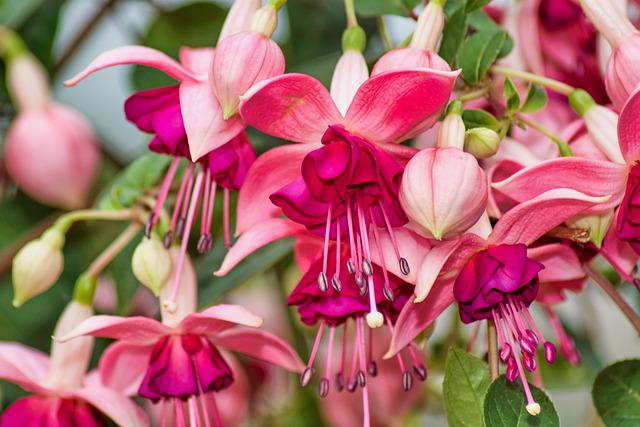
Fuchsia blossoms in folds, flutter

in the California breeze, cliffs of fuchsia,

flowers falling over planters, winging

from balconies, clinging to fences, pots & trees.

Fuchsia everywhere in the California sun

floods my mind with memories—

rocky moonstone beaches, daring Big Sur journeys,

tide pool, museum & music excursions,

even poolside in your backyard,

drinks and moonlight swims,

sharing secrets in the night, only

Fuchsia knows now that you are gone.

Jacquelyn Markham (4/21/2024)

2024 Poem-a-Day begins!

Good bye March. Hello April and National Poetry Month!

So, the early bird prompt came in and I will end March with beginning the April poem-a-day challenge (as every ending is truly a beginning).

Here is the early bird prompt from NaPoWriMo.

“Pick a word from the list below. Then write a poem titled either “A [your word]” or “The [your word]” in which you explore the meaning of the word, or some memory you have of it, as if you were writing an illustrative/alternative definition.” The list:

  • Cage
  • Ocean
  • Time
  • Cedar
  • Window
  • Sword
  • Flute

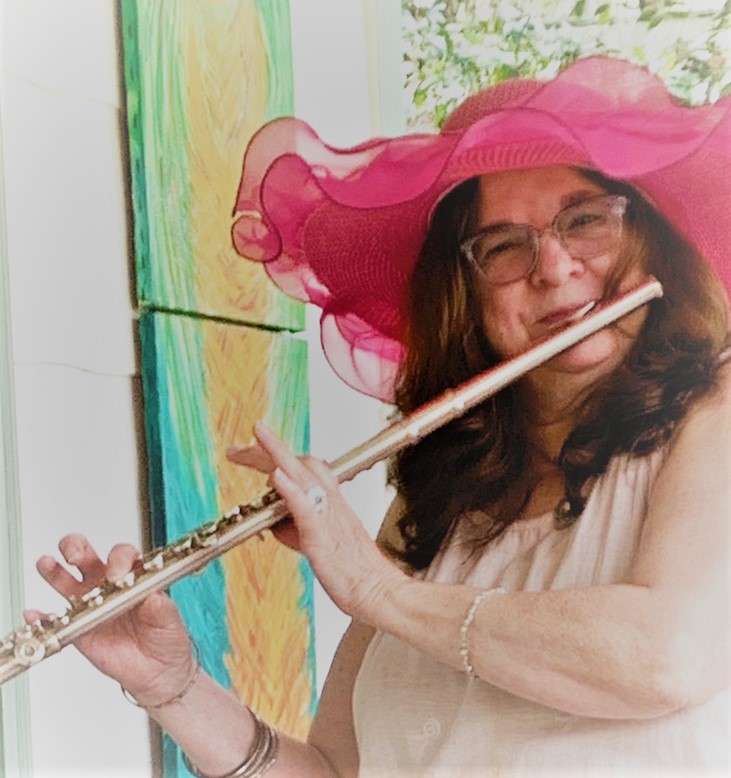
Of course, as a flutist, I certainly must select “flute”!

A flute

A flute coos blues

swallows air like a tuba.

In Galway’s hands, the flute shows off,

becomes a bumble bee!

A funky flute spits & hisses

like my tiger cat, hums

a deep rhythm like Yusef Lateef.

A flute sound in the woods

travels trees, accompanies

bird song. My flute

sends a silver melody

across the waves

an offering to the sea.

Jacquelyn Markham (3/31/24)

A flutist in an Easter bonnet!

Day 22 The Moon is Sister to the Sea              PAD 2023

Ocean Moon, photo by the poet

The Moon is Sister to the Sea

after Emily Dickinson’s “The Moon is Distant from the Sea”

The moon is sister to the sea,

with amber hands she leads the

seeming docile sea along appointed

sands. The sea never

misses a degree, obedient

to her sister moon’s eye, she

comes just so far toward the town &

just so far goes away.

Oh, yours, the amber moon &

mine, the distant sea, obedient

to the least command

the seas impose on you & me.

Hello readers! Have I stolen Emily Dickinson’s poem? No, today’s prompt requires it. You will see the prompt below as well as the original poem. In the original by Dickinson, she made the sea male and the moon female. Although both entities in nature are without a specific gender, I couldn’t imagine the sea as male, so I revised it to make the moon and sea sisters! (poetic license!) Jacquelyn

“Today’s prompt. . .is a variation on a teaching exercise that the poet Anne Boyer uses with students studying the work of Emily Dickinson. As you may know, although Dickinson is now considered one of the most original and finest poets the United States has produced, she was not recognized in her own time. One reason her poems took a while to gain a favorable reception is their slippery, dash-filled lines. Those dashes baffled her readers so much that the 1924 edition of her complete poems replaced some with commas, and did away with others completely. Today’s exercise asks you to do something similar, but in the interests of creativity, rather than ill-conceived “correction.” Find an Emily Dickinson poem – preferably one you’ve never previously read – and take out all the dashes and line breaks. Make it just one big block of prose. Now, rebreak the lines. Add words where you want. Take out some words. Make your own poem out of it!”

The Moon is distant from the Sea – (387)

By Emily Dickinson

The Moon is distant from the Sea –

And yet, with Amber Hands –

She leads Him – docile as a Boy –

Along appointed Sands –

He never misses a Degree –

Obedient to Her eye –

He comes just so far – toward the Town –

Just so far – goes away –

Oh, Signor, Thine, the Amber Hand –

And mine – the distant Sea –

Obedient to the least command

Thine eye impose on me –

Day 21 Courage         PAD 2023

Storm, photo by poet

From the list, I chose “courage” because we all need so much of it everyday! Let’s hear it poets! Does it take courage to write a poem-a-day in April?

Prompt for Day 21 from Napowrimo: “Last but not least, here’s today’s (optional) prompt. Begin by reading Sarah Gambito’s poem “Grace.” Now, choose an abstract noun from the list . . . , and then use that as the title for a poem that contains very short lines, and at least one invented word.”

Poem removed by Poet Voice for revision and publication elsewhere.

Day 20 Found by a Future Scientist PAD 2023

To appease my grumbling muse, I decided to delve into a stanza pattern to write today’s poem.  The “Terza Rima” (a poem with interweaving rhyming triplets or tercets) is a form that poets have used for long poems or as a stand alone short 3 line poem.  One famous example of Terza Rima with three tercets and a final couplet is Shelley’s of “Ode to the West Wind.” It has a specific rhyme pattern that goes like this: 1,2,1; 2,3,2; 3,4,3;4,5,4 and the couplet uses the rhyme sound from the central line of the preceding triplet, so it goes 5, 5.

Shelley’s poem has five sections, however, and you may want to check it out here.

Below is my poem, “Found by a Future Scientist,” that responds to Napowrimo’s prompt “Have you ever heard someone wonder what future archaeologists, whether human or from alien civilization, will make of us? Today, I’d like to challenge you to answer that question in poetic form, exploring a particular object or place from the point of view of some far-off, future scientist? The object or site of study could be anything from a “World’s Best Grandpa” coffee mug to a Pizza Hut, from a Pokemon poster to a cellphone.”

Found by a Future Scientist

What thing is this,

a pendulum moving to and fro

in perfect rhythm, yet tedious?

The weighted piece—a rod of sorts—must go

ticking, tocking, ticking, tocking torture.

My science sees no purpose in this show.

Back and forth ticking I must endure

as I study this strange artifact.

In this task, my expertise looks amateur.

Yet, after hours, days, months—to be exact,

I warm to this past piece as treasured bric-a-brac.

            Jacquelyn Markham (4/20/2023)