Today is the final day of the April poem-a-day challenge & I so enjoy participating with the poets on Maureen Thorson’s site: Napowrimo.net though we often call it Na/Glopowrimo as it is not only national, but global! What a joy to write and share poems with poets all over the world. It’s fast and furioius, but we can always return to the site and revisit some of the fantastic resources Maureen provides. I am not sure I was able to write with a “dispassionate tone” today, but I tried to stay somewhat faithful to the prompt as described below:
“And now, here’s this year’s final (optional) prompt. In his poem, “Angels,” Russell Edson speaks of these spiritual warrior-messenger-guardians as if they were a type of endangered animal. Brief as it is, the poem is disorienting in its use of flattened diction, odd similes, and elliptical statements. Today, try writing your own poem that discusses a real or mythical being or profession (demons, firefighters, demonic firefighters) with the same sort of musing yet dispassionate tone.” https://www.napowrimo.net/day-thirty-12/
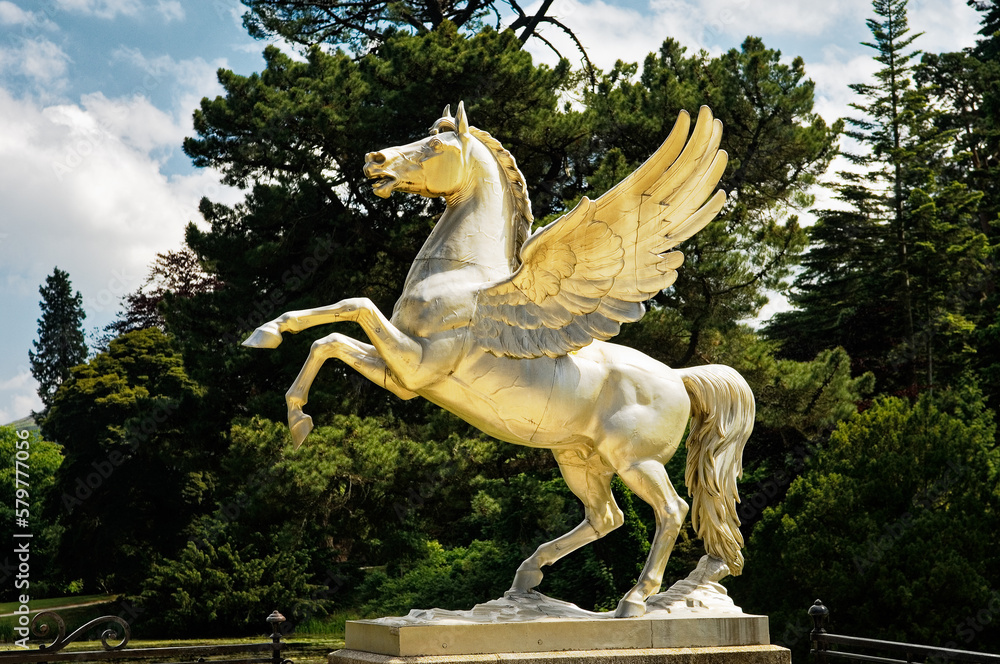
Powerscourt mansion garden near Enniskerry, Ireland, photo credit: David Matthew Lyons
Thank you to all the poets we participated in the poem-a-day challenge and to Maureen for her fun & inspiring prompts. What a joy to share words, ideas, and images with poets across the globe.
How is your poem-a-day challenge going (if you have chosen to participate)? If not, I hope you are enjoying reading the work of so many dedicated poets!
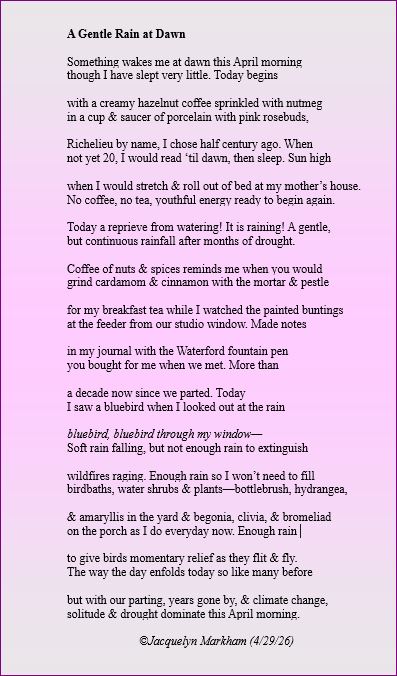
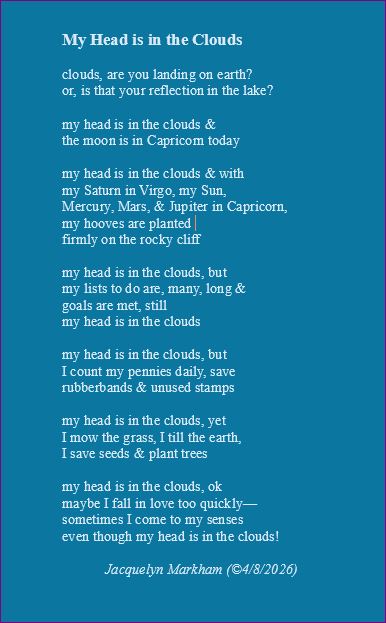
I have been writing everyday, but not blogging everyday. Today, I’ve decided to post my poem in an image because it got a little long. The prompt asks us to compare details from today with the past. To see all of the prompt, look below for Maureen’s prompt for Day 29 from Napowrimo or Na/glopowrimo (National/global poetry writing month!)
“Finally, here’s today’s prompt (optional, as always). In “After Turning the Clocks Back,” Jennifer Moxley links present with past, using a few well-placed details to invoke both a sense of the daily “now” and a nostalgic sense of the speaker’s long-ago life. In your poem today, similarly, compare your everyday present life with your past self, using specific details to conjure aspects of your past and present in the reader’s mind.” (napowrimo.net)
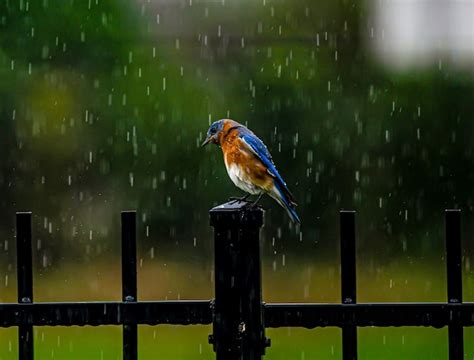
–a bluebird in the rain & My penultimate poem offering for Day 29:
Note: My blog is most active during April’s Poem-a-day Challenge, but I hope you will visit any time of year.
Also, please check out my writing mentoring service here: Moonflower Mentoring. Are you interested in a creativity mentor to get you over a dry spell? Or, one to assist with craft or to work one-on-one on a specific piece of writing? If so, please email me for more info: jacquiepoet3@gmail.com.
What a wonderful day in National Poetry Month when a poet gets to revisit a favorite poet in responding to the daily prompt of Napowrimo (National Poetry Writing Month) or as we now call it Na/Glopowrimo (National/Global Poetry Writing Month). You can write on your own sweet time or you can write along with Maureen Thorsen at napowrimo.net, Stafford Challenge (and write a poem everyday for a year!) at this link: https://staffordchallenge.com/ or many others as you choose.
What’s important is to express yourself! In our case, in the form of poetry!
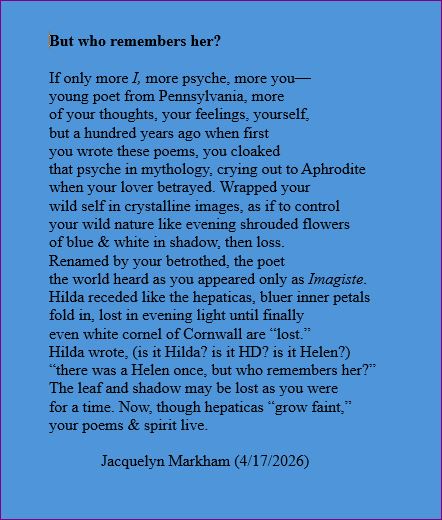
So today, on Day Seventeen, Maureen challenged us to use a poem by a favorite poet as a springboard for our own. Be sure to visit that link to get all the details.
So, I selected a modern American poet I’ve long adored: Hilda Doolittle, known–if known at all–as H.D. Imagiste!
Hilda Doolittle (1886-1961)
If you would like to know more about H.D.’s remarkable literary life & achievements, go here and learn from the “Literary Ladies Guide.”
But to my poem! Late last night after diving deeply into some of my favorite poems in my well-worn copy of the H. D. Collected Poems on my desk, I selected “Evening.” I post it in its entirety below my response to her poem.
Hello out there! It is Day 13 of the Poem-a-Day for April, 2026. How are you doing with your poems, dear poets?
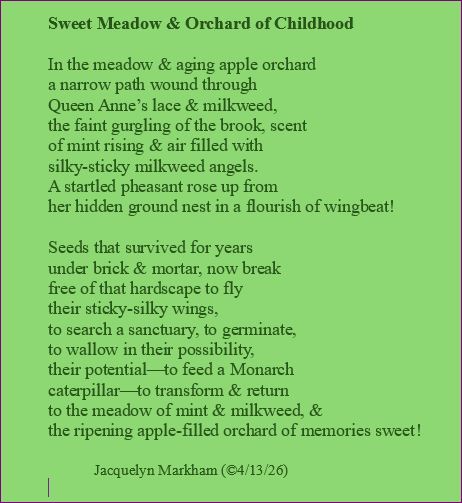
Today, our guru poet prompter, Maureen Thorsen at Napowrimo.net, asks us to try our hand at a prompt about a “cherished landscape.” (Please check out the link for more detail.) Here’s a recap:
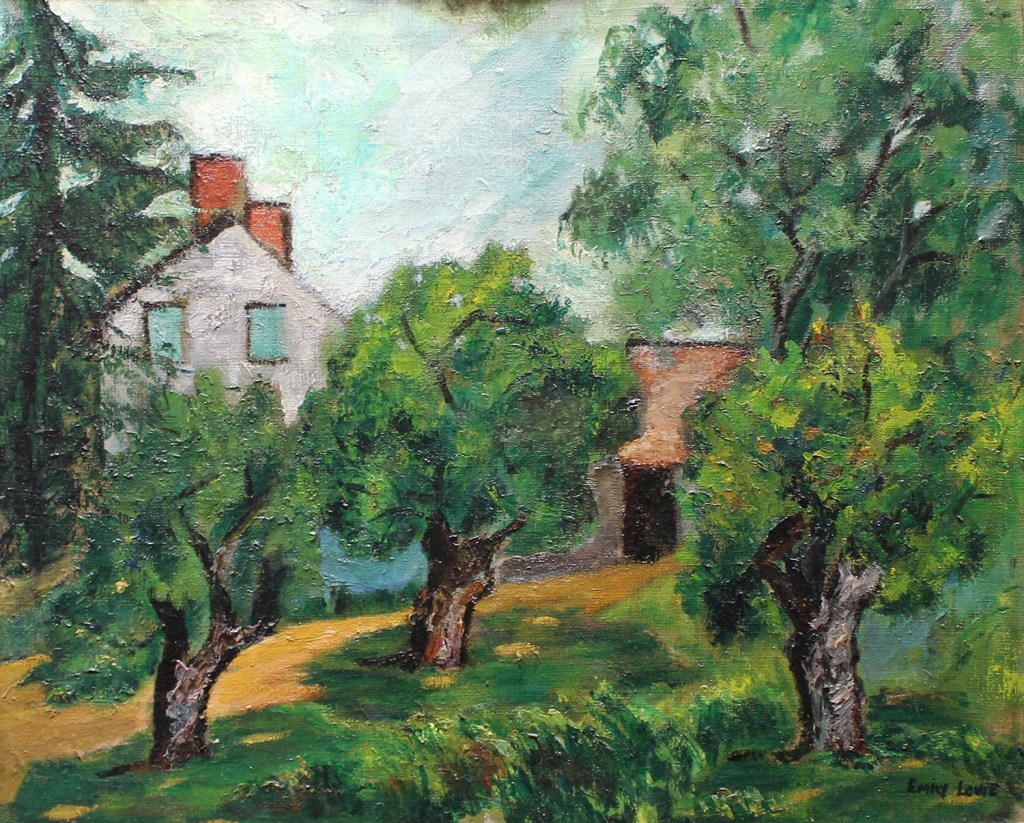
“Try your hand today at writing your own poem about a remembered, cherished landscape. It could be your grandmother’s backyard, your schoolyard basketball court, or a tiny strip of woods near the railroad tracks. At some point in the poem, include language or phrasing that would be unusual in normal, spoken speech – like a rhyme, or syntax that feels old-fashioned or high-toned.” (napowrimo)
The “remembered cherished landscape” that I chose takes me back to a meadow & apple orchard in rural Michigan, when I was a mere child and loved to explore there. I used the tiniest hint of a rhyme in the last line of each stanza.
What a sweet memory, especially when our uncle would take us on hayrides through the cherry orchards up north & as a child at home, I would traverse the paths of Queen Anne’s Lace on my own.
Poetry is a wonderful way to revisit memories, or as William Wordsworth called them “spots of time.” Do you agree with this Romantic Poet of the 19th century? He found his memories of great use in his old age, as explained here: “These ‘spots’ are potent memories that can help a person grow and learn something about life and loss. When Wordsworth reflected upon experiences that he had with nature or with other people, he often used them as inspiration for his poetry.” (credit: https://wordsworth250.byu.edu/index.html_p=386.html)
Please feel free to comment. How does your memory serve you in writing, especially poetry?
An antidote to the news, today’s prompt is quite fun! I responded to the Day 8 prompt from Napowrimo.net which is pretty simple: “In your poem for today, use a simple phrase repeatedly, and then make statements that invert or contradict that phrase.”
Poet Voice here, aka Jacquelyn Markham, poet. Welcome back to Poet Voice!!
Already participating in the Stafford Challenge (writing a poem a day all year), I am now overlapping with National Poetry Month, or as we know at Napowrimo.net, it is actually Na/GloPoWriMo (National/Global Poetry Writing Month)! Poets participate from all over the globe! Won’t you join us?
Napowrimo.net founder Maureen Thorson explains: “Each day, you’ll find here a new featured participant and daily resource. We’ll also have an optional daily prompt for those of you who find yourself in need of a little inspiration (or just like the additional challenge).” There are other sites, too, that provide prompts or you can simply begin on your own! Thank you Maureen (who founded Napowrimo in 2003!!) for your dedication to poets and National Poetry Month!
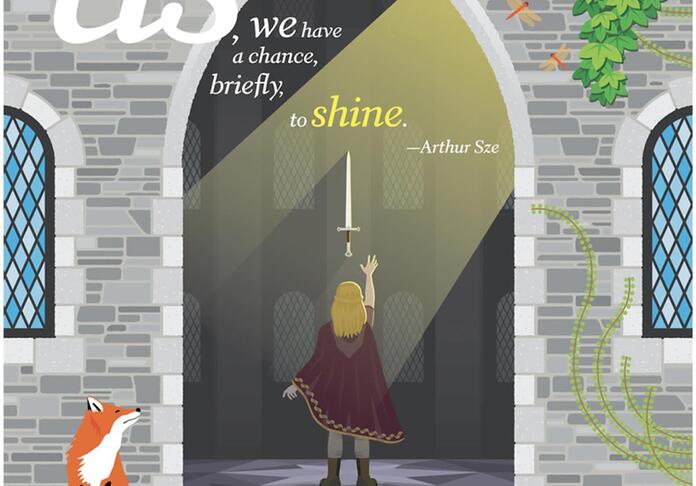
Happy 30th birthday to National Poetry Month, launched in 1996 by the Academy of American Poets! Below is this year’s poster, graced with words by our current U. S. Poet Laureate, Arthur Sze.
Rather than sharing my newly created poem from today, I am sharing a poem I wrote in another year during National Poetry Month.
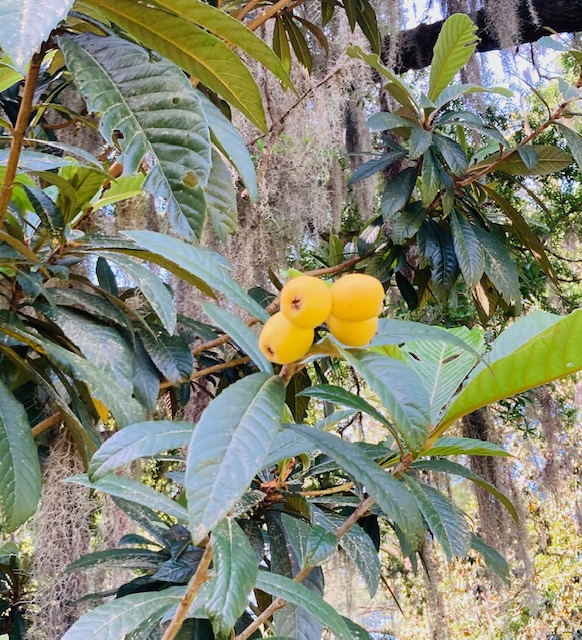
“Taste of Sun: Eriobotrya japonica” was published by Petigru Review. Proof Poem-a-day can be productive! Enjoy!
Day 16, Poem-a-Day Challenge (a poem after Blue Bayou)
Here’s the prompt: Today’s prompt asks us to “imagine music in the context of a place, but more along the lines of a soundtrack laid on top of the location, rather than just natural sounds. Today, try writing a poem that similarly imposes a particular song on a place. Describe the interaction between the place and the music using references to a plant and, if possible, incorporate a quotation – bonus points for using a piece of everyday, overheard language.”
You can visit Napowrimo, Day 16, to learn more details. Meanwhile, here’s my poem, under the wire on Day 16 of the poem-a-day challenge for National Poetry Month, 2025!
…here’s our prompt for the day (optional, as always). Donald Justice’s poem, “There is a gold light in certain old paintings,” plays with both art and music, and uses an interesting and (as far as I know) self-invented form. His six-line stanzas use lines of twelve syllables, and while they don’t use rhyme, they repeat end words. Specifically, the second and fourth line of each stanza repeat an end-word or syllable; he fifth and sixth lines also repeat their end-word or syllable. Today, we challenge you to write a poem that uses Justice’s invented form.
I found that the lines in Justice’s invented form varied from ten to thirteen syllables rather than always 12 syllables, soI did the same with my response and varied line length. Also, I wrote only one stanza of the required six lines as no length was set. Perhaps more to come!
Lunatics
Out from the rivered horizon the moon glows pink-gold.
We waited, yet nearly missed, as in silence it rose.
Across the way, the sunset in a sky of color,
a backdrop of azure splashed in red & rose.
On earth, our moods feel the presence of the moon.
Although we were given the opportunity to write a “loose” villanelle today, I went with the traditional rhyme scheme. You will find the rules for this form linked below, courtesy of the Academy of American poets.
From NaPoWriMo, my favorite poem-a-day challenge website, Maureen Thorson offered this optional prompt: “Take a look at Kyle Dargan’s “Diaspora: A Narcolepsy Hymn.” This poem is a loose villanelle that uses song lyrics as its repeating lines (loose because it doesn’t rhyme). Your challenge is, like Dargan, to write a poem that incorporates song lyrics – ideally, incorporating them as opposing phrases or refrains.”
From Nina Simone’s Song “For All We Know” from NinaSimone.com
This might only be a dream *first refrain Like the ripples, like the ripples in the stream *second refrain
Villanelle: A1 b A2 / a b A1 / a b A2 / a b A1 / a b A2 / a b A1 A2.