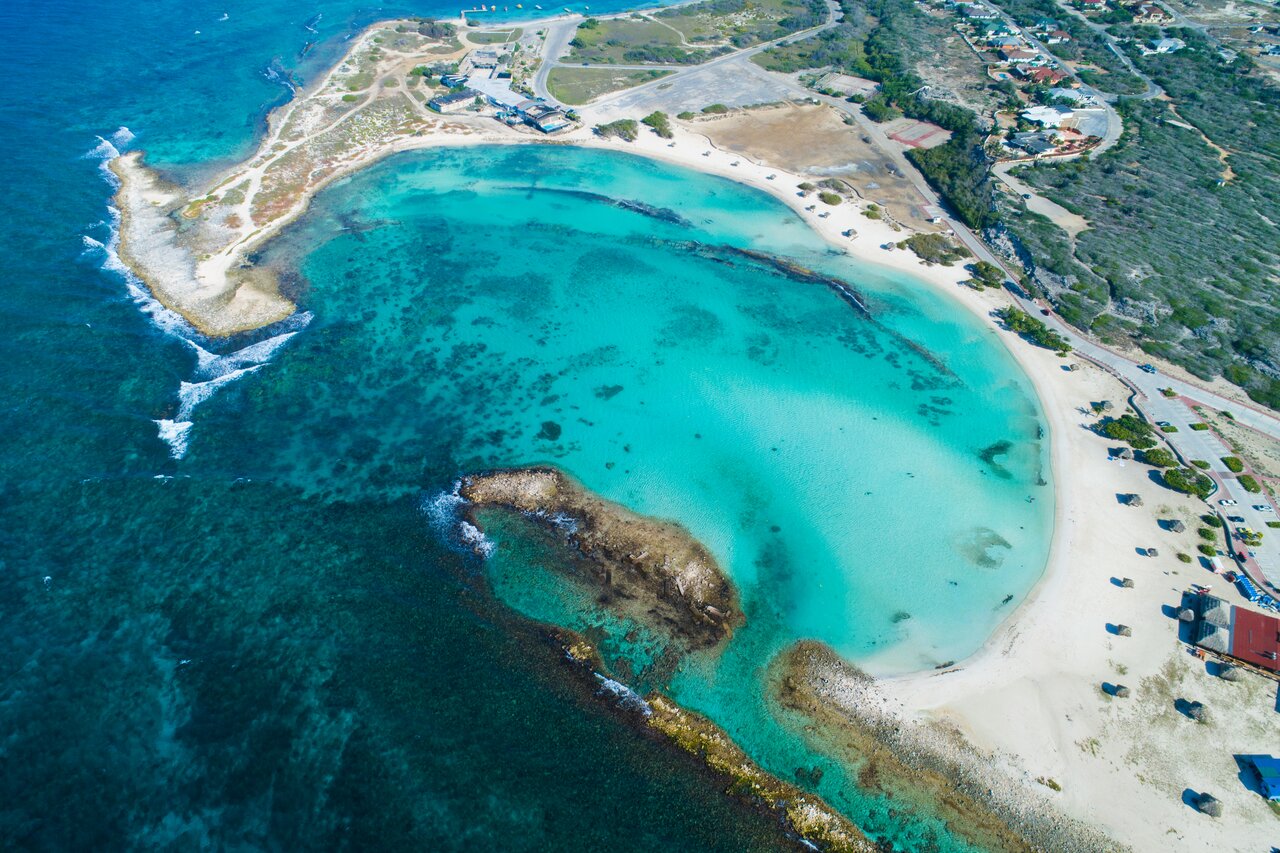
Bonaire Island in the Carribean (image courtesy of keycaribe.com)
Napowrimo.net Prompt: “Our optional prompt for the day challenges you to write a poem that recounts a historical event. In writing your poem, you could draw on your memory, encyclopedias, history books, or primary documents.”
The Poem:
TOBAGO OIL SPILL REACHES BONAIRE,
the headline blasts to the world,
but the world doesn’t hear.
Mangrove, fish, and coral
choked with flowing oil from capsized barge.
The sea hears, the shore hears,
the mangroves hear,
the fish hear,
the coral hear.
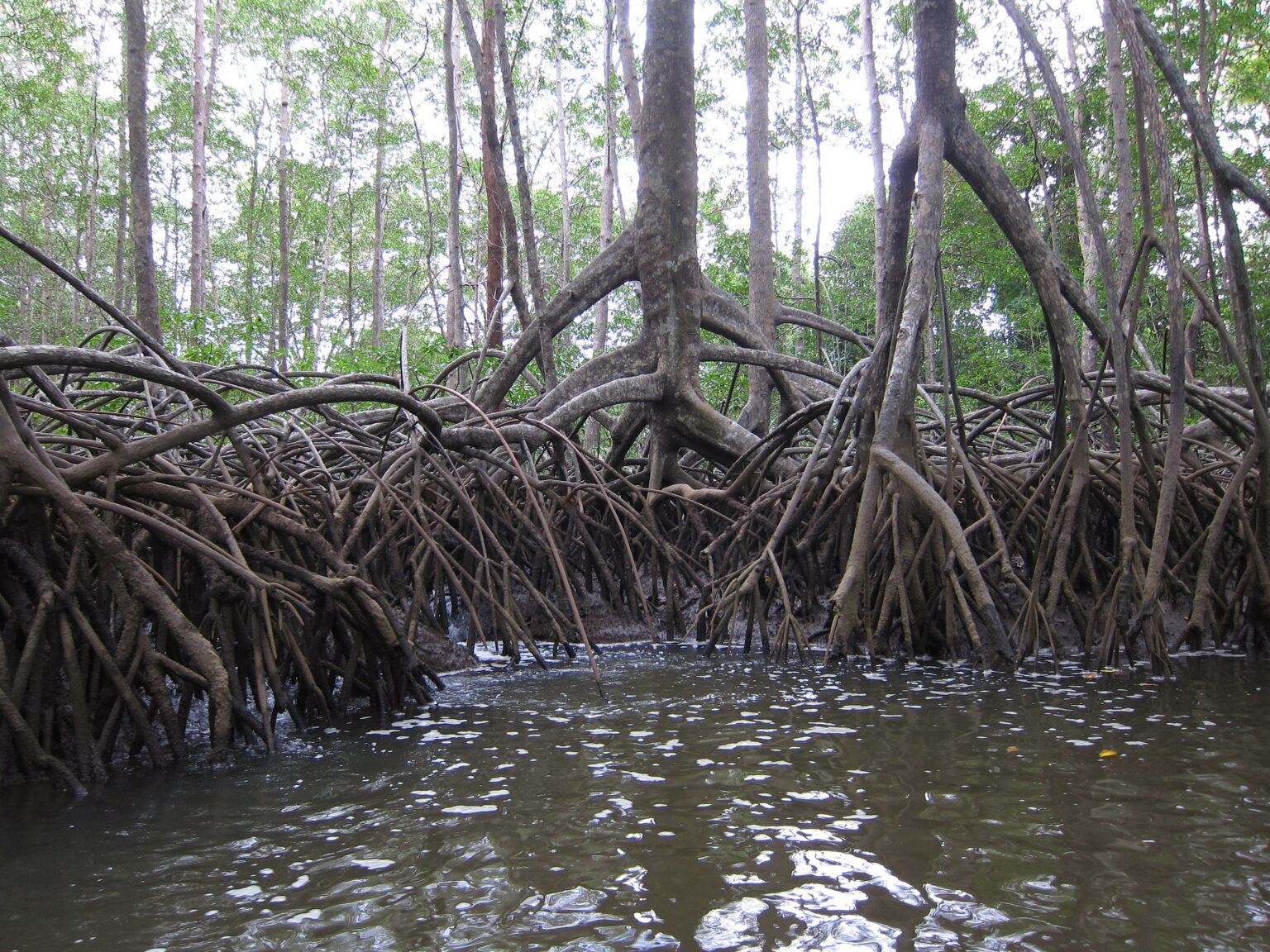
Mangroves live in salty water.
Mangroves live in harmony
with ebb and flow of the tide,
in harmony with fish,
in harmony with coral,
in harmony with humans.
Mangroves protect & buffer
homes on the coast &
hoard the carbon we spew.
Mangroves know the oil
in the depths of their souls.
Jacquelyn Markham (4/20/2024)
The Story behind the poem:
Because my latest book of poetry, Rainbow Warrior, is a collection of eco-poetry with some focus on environmental issues like oil disasters and nuclear testing, I am going to write a short poem on one of these historical events. Unfortunately, only too often do we hear about an oil spill and very often, we don’t hear at all.
In doing my research today, I realized that April 20 is the anniversary (if that’s the right word) of the devastating Deepwater Horizon Oil Spill, April 20, 2010. According to Reuters news source, it was the worst accidental offshore oil spill in history, killing 11 workers and releasing 134 million gallons of oil into the Gulf of Mexico.
I addressed the Deepwater Horizon Oils Spill deeply in my poem, “Myth of the Infinite Sea,” first published in 2012 in the Anthology of Appalachian Writers, Vol. IV, Shepherd University, and included in my collection, Rainbow Warrior, published by Finishing Line Press (2023).
This link details major oil spills in US since 1969. There are far too many!
Jacquelyn Markham, poet & writer, author of Rainbow Warrior, Finishing Line Press (2023), Peering Into the Iris: An Ancestral Journey and China Baby, among other titles.
And on this 18th day of our challenge, Maureen at Napowrimo says: “Today, we’d like to challenge you to write a poem in which the speaker expresses the desire to be someone or something else, and explains why.”
What I Long to Be
I long to be a new version of me.
I long to be a rockin’ rock star who
tours the world and sings to packed crowds,
with a legacy that lasts a half century.
I long to be much taller & thinner, much more stylish.
I long to write novels & sell them to
moviemakers who turn them into series.
I long to have a productive green garden,
an immaculate yard, and a spotless house,
clean sheets every night, no ring on the tub.
I long to be strong & courageous, climb
rocks like a pro, & nothing too heavy for me to lift!
No mountain too high for me to climb!
I long to know no fear—not in the dark of night
or on the busiest expressway that crosses the city
or the highest suspension bridge.
An elevator up to the 100th floor, no problem.
No anxiety, no jitters, no vertigo.
I long to be a famous philanthropist & give money away,
an environmentalist who saves the manatees & the whales.
But, since all of these longings are far from my reach,
Napowrimo’s Prompt: “Today, we’d like to challenge you to write a poem that is inspired by a piece of music, and that shares its title with that piece of music.”
Because we are focusing on music today, I decided to write a villanelle, a form that dates back to Italy during the 16th century. Villanelles were songs, so it seemed a good fit. The form enjoyed a revival during the 19th century and to brush up on the form, I studied a villanelle by Oscar Wilde, titled “Theocritus” (check it out here). The villanelle consists of 5 tercets & a quatrain with a specific rhyme scheme, sometimes restricting syllables, but apparently not always. If you want to learn more about Oscar Wilde’s poem, you can find a fascinating article by the Guardian on the poem:https://www.theguardian.com/books/2016/aug/29/poem-of-the-week-theocritus-villanelle-oscar-wilde
You will notice the repetition of two refrains selected from the first stanza.
La Vie en Rose: A villanelle
“I thought that love was just a word/They sang about in songs” (Edith Piaf)
When I hear La Vie en Rose,
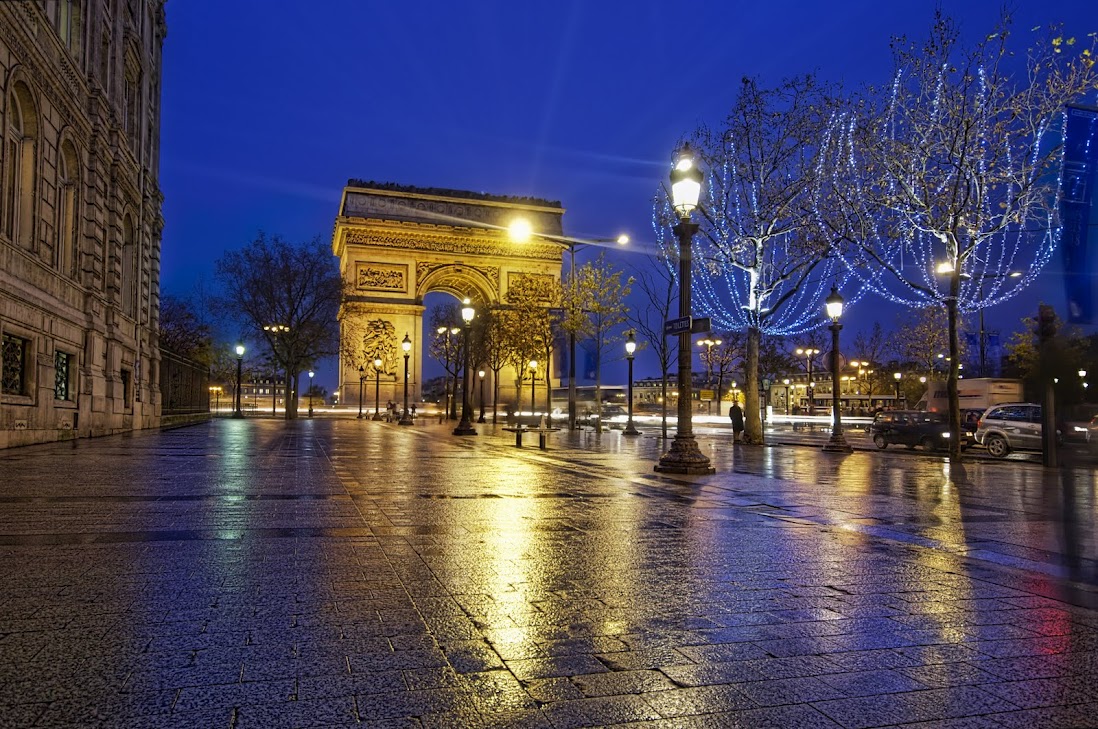
I want to stroll through Paris in the rain.
Do you, like Edith, believe in love?
Nymphs and fawns in fountain spray,
in Champs-Élysées, leaves skitter black with rain,
Day 16 moves us into the second half of the month, and yet, summoning the muse becomes a bit difficult–at least it has for me today. Nevertheless, my memory has joined the muse again and I have composed a poem.
Maureen at Napowrimo.net always reminds us the prompt is “optional,” but I do like to try to follow along with other poets. It’s interesting to see the many different perspectives. And, sometimes making an effort to try something new results in a good poem!
So here it is: “today, we challenge you to write a poem in which you closely describe an object or place, and then end with a much more abstract line that doesn’t seemingly have anything to do with that object or place, but which, of course, really does. The “surprise” ending to this James Wright poem is a good illustration of the effect we’re hoping you’ll achieve. An abstract, philosophical kind of statement closing out a poem that is otherwise intensely focused on physical, sensory details.”
Remembering Neruda on the tavern terrace in spring
Jasmine & clematis drape a trellis in fragrance,
Nina Simone’s voice casts a spell on the night
while the server whose favorite poet is Pablo Neruda
(he has told me, noting I write poems on my placemat)
pours wine with a flair & a golden stream
swirls into my glass. Nina’s spell gives way
to Stevie Wonder’s funky beat on this tavern terrace
as cool as the spring evening laden with scent.
I recopy the poem I have written about the night & offer
it with my tab to the dark-eyed waiter who returns
to his Chilean home in the morning.
Was it Neruda’s poems of love or despair
that he held in his memory?
Jacquelyn Markham (4/16/2024)
Jacquelyn Markham, poet & writer, author of Rainbow Warrior, Finishing Line Press (2023), Peering Into the Iris: An Ancestral Journey and China Baby, among other titles.
Today’s prompt from Napowrimo.net asked us to get inspired by stamps!
It took me awhile as first I went to the National Postal Museum and there was so much to learn! Next, I tried the recommended @StampsBot. Like Maureen said, there was an amazing “wide, wonderful, and sometimes wacky world of postage stamps” out there! But, still, difficult to zero in on just one. Curious how many stamps from other countries feature cats. I don’t recall any US stamps giving cats so much attention. In the end, though, it was this gorgeous palm tree and sunset that caught my eye. And now, I want to go to Aruba!
It also reminded me of a painting I did en plein air, years ago on a nearby beach. I gave it as a wedding gift to some dear friends.
Poet’s painting of island sunset.
And here is my little poem inspired by this lovely stamp from Aruba:
Napowrimo.net Prompt: Today’s (optional) prompt asks you to write a poem of at least ten lines in which each line begins with the same word (e.g., “Because,” “Forget,” “Not,” “If”). This technique of beginning multiple lines with the same word or phrase is called anaphora, and has long been used to give poems a driving rhythm and/or a sense of puzzlebox mystery. To give you more context, here’s an essay by Rebecca Hazelton on her students’ “adventures in anaphora,” and a contemporary poem that uses anaphora to great effect: Layli Long Soldier’s “Whereas.”
As I perched in a cottonwood tree, feeling as free
as a bird who could fly, I thought I heard a flute
song far far from me—like smoke in the sky,
the melody went by. It seemed so close to me,
I could kiss the fingers of the one who played flute,
but alas, then, it went mute and I heard only the noise of a car!
It was far from me, but still, it jarred my bliss
in this peaceful spot that wasn’t cold nor was it hot.
It was until the car, pure bliss. Oh what a bitter pill
to lose the trill of the flute and the melodies of Bach,
traded for zoom, zoom, zoom of the car. And that car
was not far at all from my blissful state in the tree!
Jarring me, giving me jitters when moments ago
I felt only bliss and a kiss of the breeze that
carried the song of a mockingbird and a flute.
What glee! What bliss! To be so free! To close my eyes
to feel like a soft kiss the notes of the flute
and the birdsong! Until the car, smoke, and the noise
made it fly from me as I perched in this cottonwood tree!
Jacquelyn Markham 4/13/2024
Jacquelyn Markham, poet & writer, author of Rainbow Warrior, Finishing Line Press (2023), Peering Into the Iris: An Ancestral Journey and China Baby, among other titles.
And here’s the prompt for today’s poem:
Napowrimo.net: “our optional prompt for the day asks you to play with rhyme. Start by creating a “word bank” of ten simple words. They should only have one or two syllables apiece. Five should correspond to each of the five senses (i.e., one word that is a thing you can see, one word that is a type of sound, one word that is a thing you can taste, etc). Three more should be concrete nouns of whatever character you choose (i.e., “bridge,” “sun,” “airplane,” “cat”), and the last two should be verbs. Now, come up with rhymes for each of your ten words. (If you’re having trouble coming up with rhymes, the wonderful Rhymezone is at your service). Use your expanded word-bank, with rhymes, as the seeds for your poem. Your effort doesn’t actually have to rhyme in the sense of having each line end with a rhymed word, but try to use as much soundplay in your poem as possible.”
Napowrimo.net: “And last but not least, our optional prompt. Today, we’d like to challenge you to write a poem that plays with the idea of a “tall tale.” American tall tales feature larger-than-life characters like Paul Bunyan (who is literally larger than life), Bulltop Stormalong (also gigantic), and Pecos Bill (apparently normal-sized, but he doesn’t let it slow him down). If you’d like to see a modern poetic take on the tall tale, try Jennifer L. Knox’s hilarious poem, “Burt Reynolds FAQ.” Your poem can revolve around a mythical character, one you make up entirely, or add fantastical elements into a real person’s biography.”
Today, Day 11 of the poem-a-day challenge in honor of National Poetry Month, 2024, we were encouraged by Napowrimo.net to write a one line poem: “our optional prompt for the day honors the “ones” in the number 11.”
Maureen Thorsen writes: “Today, we’d like to challenge you to write either a monostich, which is a one-line poem, or a poem made up of one-liner style jokes/sentiments.” This prompt sends us to Writer’s Digest where we find a different prompt and an example of monostich (a one line poem) by Robert Lee Brewer.
Regret
by Robert Lee Brewer
I hold a chip bag that only holds crumbs.
That’s a sad story, Robert, but I think mine is even sadder or at least nostalgic!
By the way, if you want to check out the prompts at Writer’s Digest, curated by Robert Lee Brewer, you can find them here:
Robert’s prompt for today is: “For today’s prompt, write a memory poem. The poem could conjure up an actual memory that you have from your childhood, or last week, or earlier this morning. Or the memory could be made up. Or the memory is just a starting point for a completely different poem. Your memories, your poems.”
I combined the two prompts for a one-liner memory poem. Hope you like it!
Rainbow Warrior
Jacquelyn Markham, poet & writer, author of Rainbow Warrior, Finishing Line Press (2023), Peering Into the Iris: An Ancestral Journey and China Baby, among other titles.
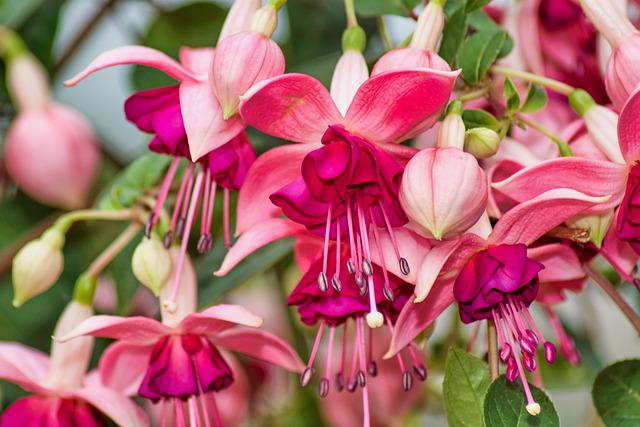
:max_bytes(150000):strip_icc()/fuchsia-flower-closeup--large-fuchsia-flower-839956022-1808bb05b7f14208b7d0353bf0667132.jpg)







 Poet Voice