Those Lonesome Fishing Boats

Day 16, Poem-a-Day Challenge (a poem after Blue Bayou)

Here’s the prompt: Today’s prompt asks us to “imagine music in the context of a place, but more along the lines of a soundtrack laid on top of the location, rather than just natural sounds. Today, try writing a poem that similarly imposes a particular song on a place. Describe the interaction between the place and the music using references to a plant and, if possible, incorporate a quotation – bonus points for using a piece of everyday, overheard language.”

You can visit Napowrimo, Day 16, to learn more details. Meanwhile, here’s my poem, under the wire on Day 16 of the poem-a-day challenge for National Poetry Month, 2025!

Lime Lake, Michigan

Those Lonesome Fishing Boats

after Blue Bayou

On the green Lime Lake

where the lonesome fishing boats

slap the long low dock

while the clear waves wash

the flat grey stones. I’m pining

for a boy back home, carve initials

in the white birch trunk to

keep that southern boy of mine

in my heart near the limestone lake.

The clear spring lake, where my grandpa

built in his overalls and my grandma

dreamed in her pillbox hat &

I was lonesome all of the time

‘cause I left my baby behind.

White birch bark curled into delicate boats

like the Natives’ boats, when they

waited to get back home, a canoe

filled with fish, silver in the sun.

They were lonesome all of the time.

Shallow green, quiet waves,

rustling trees, sandy bottom rises

with our steps and fishing boats

slap against the long dock

in a rhythm with the voices

of my family in the distance, and

the smell of campfire smoke.

I’m going back some day

come what may to

the memories of the clear

Lime Lake and the White Birch bark

where I carved my baby’s name

since I left my baby behind.

Birch bark grown, covers over

my baby’s name now. Oh, some

sweet day, gonna take away

this hurting inside.

I’m going back some day

to the green Lime Lake.

Jacquelyn Markham ©4/16/2025

Image courtesy of pixy.org

Thank you for visiting Poet Voice @jacquelynmarkham.com

Lunatics

Getty image, courtesy of http://www.popsugar.com

Prompt for Day 13 from NaPoWriMo:

Also, the short version below:

…here’s our prompt for the day (optional, as always). Donald Justice’s poem, “There is a gold light in certain old paintings,” plays with both art and music, and uses an interesting and (as far as I know) self-invented form. His six-line stanzas use lines of twelve syllables, and while they don’t use rhyme, they repeat end words. Specifically, the second and fourth line of each stanza repeat an end-word or syllable; he fifth and sixth lines also repeat their end-word or syllable. Today, we challenge you to write a poem that uses Justice’s invented form.

I found that the lines in Justice’s invented form varied from ten to thirteen syllables rather than always 12 syllables, soI did the same with my response and varied line length.  Also, I wrote only one stanza of the required six lines as no length was set. Perhaps more to come!

Lunatics

Out from the rivered horizon the moon glows pink-gold.

We waited, yet nearly missed, as in silence it rose.

Across the way, the sunset in a sky of color,

a backdrop of azure splashed in red & rose.

On earth, our moods feel the presence of the moon.

All night, we cha-cha in the light of the moon.

Jacquelyn Markham© (4/13/2025)

Courtesy of wisdomofthespirit.com

Enjoy exploring the spiritual meaning, symbolism and astrology of the April’s pink moon:

How to Get the Most Out of April’s Pink Moon, According to an Astrologer by popsugar.com

Pink Moon Spiritual Meaning & Symbolism by wisdomofthespirit.com

Thanks for visiting me at Poet Voice, thinking about poetry everyday!

For All We Know: Villanelle

Day 11 Poem-a-Day Challenge

Although we were given the opportunity to write a “loose” villanelle today, I went with the traditional rhyme scheme. You will find the rules for this form linked below, courtesy of the Academy of American poets.

Rules of the Villanelle Form (from Academy of American Poets @ https://poets.org)

From NaPoWriMo, my favorite poem-a-day challenge website, Maureen Thorson offered this optional prompt: “Take a look at Kyle Dargan’s “Diaspora: A Narcolepsy Hymn.” This poem is a loose villanelle that uses song lyrics as its repeating lines (loose because it doesn’t rhyme).  Your challenge is, like Dargan, to write a poem that incorporates song lyrics – ideally, incorporating them as opposing phrases or refrains.”

From Nina Simone’s Song “For All We Know” from NinaSimone.com

This might only be a dream *first refrain
Like the ripples, like the ripples in the stream *second refrain

Villanelle: A1 b A2 / a b A1 / a b A2 / a b A1 / a b A2 / a b A1 A2.

Where Trains Go

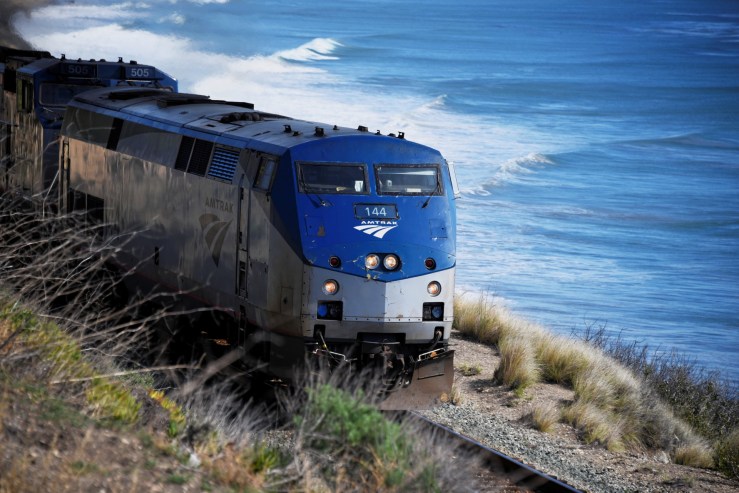
Like a train a track that stretches ahead, the days blur by and we are now on Day 9 of the April poem-a-day challenge, chugging away toward the middle of the month. Below is the optional prompt from Maureen at the NaPoWriMo poetry site. This prompt is all about Rhyme & Sound which brought to my mind, a train ride.

And here’s our optional prompt for the day. Like music, poetry offers us a way to play with and experience sound. This can be through meter, rhyme, varying line lengths, assonance, alliteration, and other techniques that call attention not just to the meaning of words, but the way they echo and resonate against each other. For a look at some of these sound devices in action, read Robert Hillyer’s poem, Fog. It uses both rhyme and uneven line lengths to create a slow, off-kilter rhythm that heightens the poem’s overall ominousness. Today we’d like to challenge you to try writing a poem of your own that uses rhyme, but without adhering to specific line lengths. For extra credit, reference a very specific sound, like the buoy in Hillyer’s poem.” Maureen Thorson

Thank you for visiting Poet Voice!

Jacquelyn ~

Cinnamon

Kind of light and fun for a sixth day of the Poem-a-day challenge. How are you doing out there poets and writers and appreciaters of art?

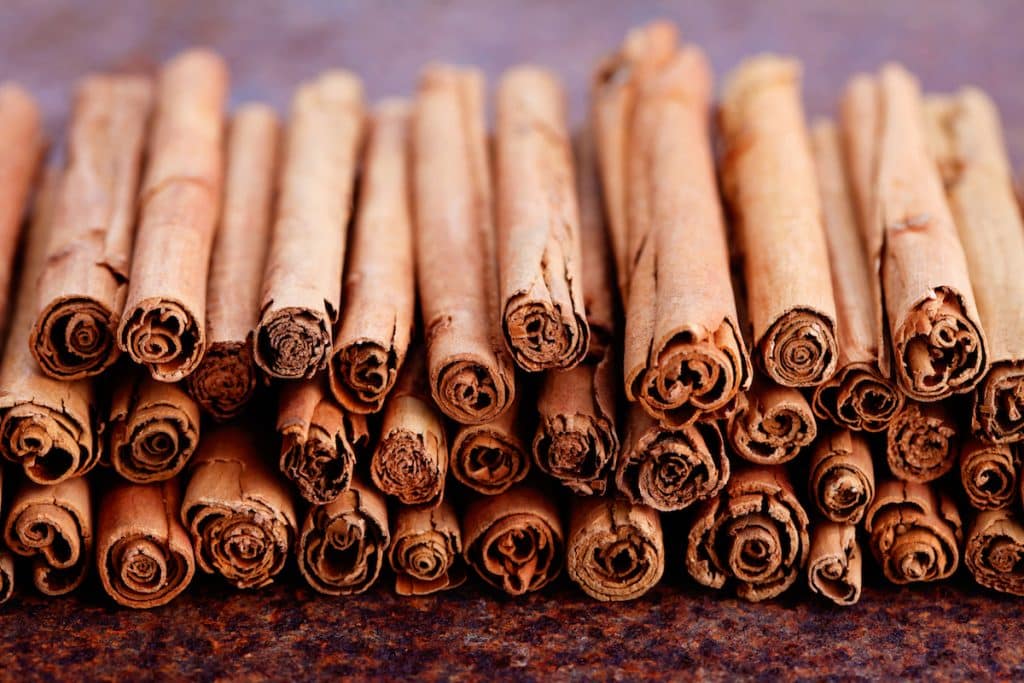
Cinnamon

A dash of this spice

in my coffee, cream makes it

oh so golden

with a tingle of chai

but if it’s too heavy

it could make me wheeze

and if it’s too light

just a pinch makes me sneeze.

Like nutmeg, the benefits are great,

good for insomnia &

good for the skin.

Come fall, in the states

folks love pumpkin lattes

even if temps have not fallen.

The use of this spice goes back a long way!

3,000 years ago the sweet-smelling

spice was used to embalm the dead.

All of these uses give this spice

a noteworthy name—

until in our modern age

studies found lead in it.

Jacquelyn Markham ©2025

“Cinnamon” is a poem I wrote in response to Day 6 prompt of Poem-a-Day 2025 (30 Poems in 30 days). Check it out!

Now, dear readers, how did I come up with this odd poem? Why yes, it was the day 6 prompt that gave us so many choices and directions to go by . Please, visit NaPoWriMo to get all details, but basically, you choose a number from the chart which leads to a taste that becomes the title and two more words to work in. In my case, wheeze and golden were the words.

The poem starts out lovely with a sweet-smelling scent, but alas, like so many wonderful things in our modern world, the spice turned toxic. Not all, of course, but be mindful! Still, cinnamon has some health benefits according to some reports, like these claims from Cleveland Clinic.

And then, we may want some retro music to accompany our latte, so here it is! Neil Young’s “Cinnamon Girl.”

Neil Young, “Cinnamon Girl”

All poems brought to you by Poet Voice (J. Markham).

Lammas, Harvest & too hot to bake?

Like Solstices and Equinoxes, the cross quarter dates can vary a day or two, so you may have celebrated Lammas yesterday on August 1 or you may be celebrating today. Also, as with any holiday that has been celebrated since ancient times, there are so many variations. The cross quarter holidays fall between the change of seasons–fall, winter, spring, and summer, so, as we celebrate Lammas (or Lughnasa as it is also called), let us be grateful for the harvest.

What is important to me today is to celebrate the harvest and bread (lamas is loaf mass). I plan to break out the sourdough starter and put my hands in the dough. I have enjoyed the videos that Hendrik has shared on his channel Bread Code.

If it is just too hot to bake (with climate change and our hot planet earth)! Sit down with a cool drink and watch this vintage film with Meryl Streep that I watched with a dear friend in Long Beach, California now many decades ago.

If it’s too hot to bake, once you have finished watching Meryl Streep, learn about ways to help save the planet from burning up!

Too hot to bake? Help turn it around at Greenpeace.

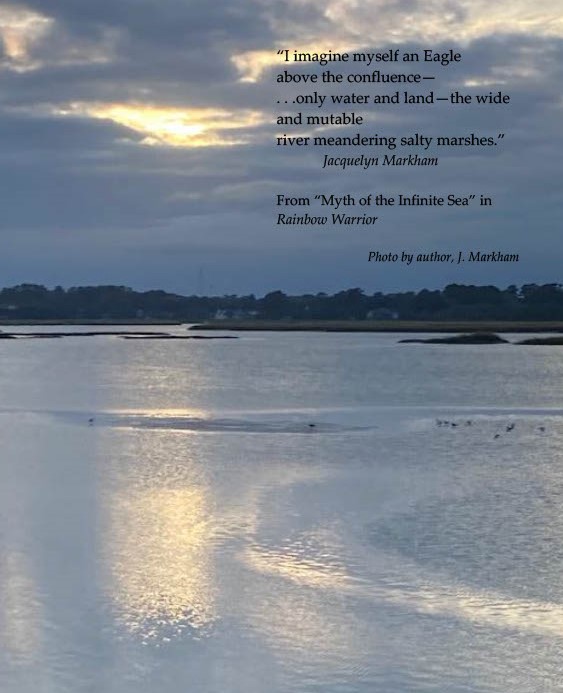
Read full poem in Rainbow Warrior, my latest book of poems, that celebrates nature and calls us to action.

Jacquelyn Markham, Poet Voice

Weaving a Golden Web

A golden orb weaver has moved into a corner of my front verandah and seems quite at home there. She looks as if she has no intentions of ever moving away. Though surely a gift from the universe, if any of you have ever seen this spider, you know that she can be a bit daunting!

According to one website, a group of writers and entymologists who created it out of a labor of love, the golden orb weaver is a “fascinating spider known for its intricate, large webs that shimmer like gold in the sunlight.”

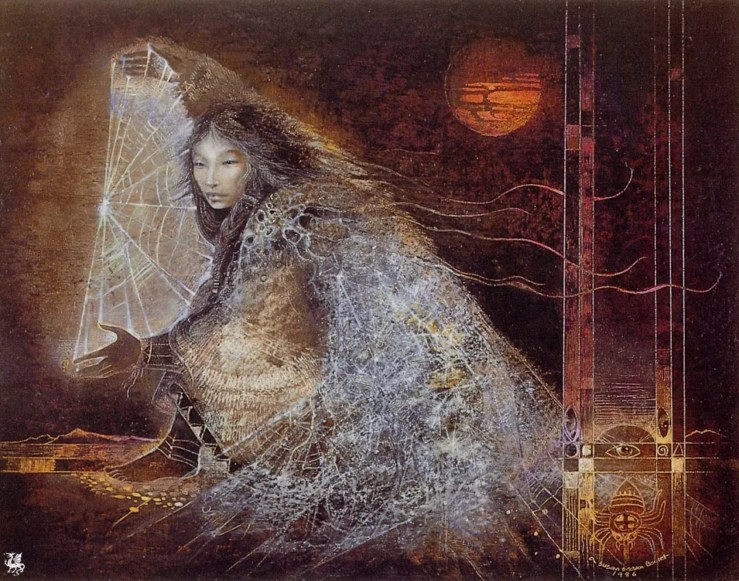
Spider Woman Goddess, Susan Seddon Boulet

(By the way, if you visit, what’sthatbug.com, be sure to click on the ads which, they explain, help to “generate revenue to pay for hosting, expert entomologists, and bandwidth costs when visitors click on ads on our site.”)

So, alleviating any fears I may have of the amazing golden orb weaver, the information from these entomologists is of interest: “orbweaver spiders are generally non-threatening creatures that pose little risk to humans.” I have noticed that this very large spider is completely oblivious to my presence even when I am watering my porch plants nearby. Whatsthatbug.com continues its “interaction with humans” details: “Their venomous bites are usually harmless, and they exhibit docile behavior in their natural habitats.” For sure, I will not be putting my hand into the web and the Golden Orb Weaver is a very busy spider! She has no time for the likes of me. So, I turn to my usual approach, the symbolism of this “animal spirit.”

Jamie Sams & David Carson in The Discovery of Power Through the Ways of Animals, a guide that accompanies my deck of medicine cards (Bear & Company, Santa Fe, NM), says: “Spider is the female energy of the creative force that weaves the beautiful designs of life.. .If Spider has dropped into your cards (or life, my italics), she may be telling you to create, create, create.”

Spider Woman, popular culture notwithstanding, has been a powerful symbol in some American Indian cultures (Navaho & Hopi), for example, “Spider Woman represented wisdom and education,” according to encyclopedia.com. She is associated with crops, weaving and the goddess as “a symbol of the ability to weave and to create something from one’s own body, just as a spider makes silk” (encyclopedia.com).

Susan Seddon Boulet created a powerful image of spiderwoman goddess.
Image credit: https://arthive.com/artists/10191~Susan_Seddon_Boulet/works/284690~Shaman_Spiderwoman

So, what does my symbol tell me today? Create, create, create & remember the sheer wonder of our world!

Golden Orb Weaver Spider

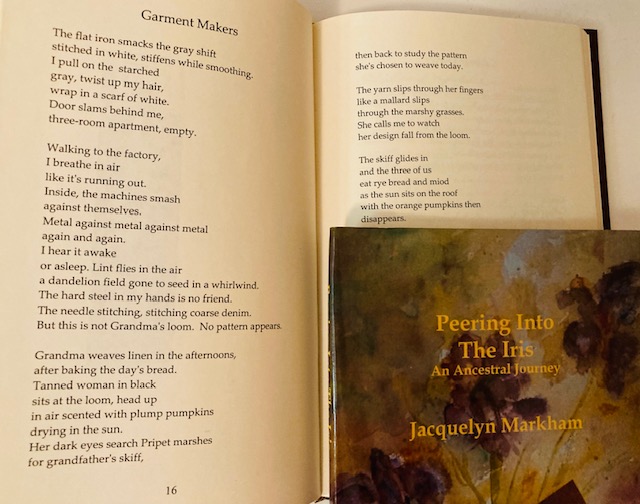
And, dear readers, I will end with a poem from my book Peering Into the Iris: An Ancestral Journey, that tells a story of my ancestors & their weaving.

Poem & Image by poet, Jacquelyn Markham

Get in Touch

Jacquelyn is always available for readings and mentoring poets and writers. If you want to chat about poetry, books, or creativity, don’t hesitate to reach out, make a comment, or send an email to: jacquiepoet3@gmail.com

Gladioli from my Garden Against “Abstract Marsh”

(Acrylic on stretched canvas, painted by the author on retreat at Penn Center, St. Helena, SC, ca. 2003)

The continuity of art reveals itself more each year.  Images, colors, and themes recur in our writing, painting, photography, cooking, and gardening.  So, by chance, when I cut the gladioli from my June garden and placed it in a vase, it gravitated to a painting on my wall.  So many times, I have seen in nature like attracts like, for example, yellow butterflies light on yellow flowers.

But, back to the continuity of art.  Even in cooking, for example, I have sour dough starter in my refrigerator right now, a baking theme from many years ago when sour dough enjoyed another popularity trend. So, when I was baking bread a week or so ago, I pulled out a poem titled “Bread-Baking” from my collection Lavender Blooms Turn Eggplant Purple (there’s that recurring color!) After some searching, I found the poem and revised it. I’ll share some lines with you here.

Thinking the bread-baking might restore

the home my vagabond dreams threaten,

I set the yeast & the flour in action.

Fingers knead the dough,

punch, pull, stretch until

finally, I shape a smooth loaf,

place it in the bowl,

cover with clean linen.

Time now for its rising.

I wonder as I rest,

steaming tea to my lips,

leaves rustling outside the window,

how yeast turns flour to bread &

what leaven would so wonderfully

transform the early days

into sustenance for the soul?

Jacquelyn Markham (excerpt Bread-Baking)

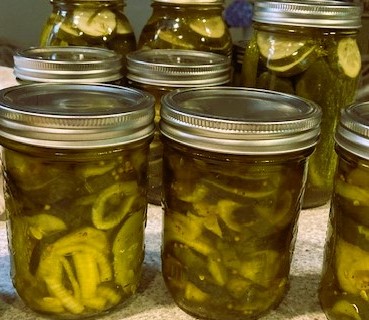
And, now, it’s June and in my region along with the stunning purple & wine gladioli, we enjoy the abundance of vegetable gardens. So, the other day, I relived another poem, from another time, “Today This Jar of Pickles is My Poem.” This poem became the title poem of a chapbook of the same name that placed as a finalist in a chapbook contest sponsored by what was then Armstrong State College in Savannah (now Georgia Southern University).

from the poem:

I struggle with domesticity

as I sterilize jars, clear

pack fresh cucumbers, garlic

sharp smelling dill

breathe steaming vinegar

vapor that unclouds the brain

Lids bounce in boiling water

I fish for one and quickly seal

each jar, this could be a poem

each jar, this a painting

each jar, I question

and justify

 . . .

On gray winter days

sculptures in glass on my shelf

green peppers and cayennes twist in to form

zucchinis and crookneck yellows

wind, curve around each other

speckled beans, mosaics

I take down jar after jar

chill or heat the colors

shapes, lines

patterns that turn to food and are eaten

Jacquelyn Markham

            (excerpt from “Today This Jar of Pickles is My Poem”)

So, today, look around you.  Do you see the continuity of art around you? And, the continuity of  your life?

Jacquelyn~ aka Poet Voice

“Deep Purple,” a song that keeps coming back around

Day 29: I envy you your swiftness

painting of Mercury by John Woodrow Kelley

Hello poets & lovers of poetry! The penultimate day of our April 2024 poem-a-day challenge has arrived! For this day 29, the prompt asked us as to use as inspiration one of the ten most-used words of singer-songwriter Taylor Swift (really!) in her song lyrics. Her new album Tortured Poets Department hopefully doesn’t represent how we poets feel on Day 29 of the challenge, but we could use some of her publicity!

See the complete prompt from Maureen Thorson’s Napowrimo.net below the poem for more details. I must confess that my use of swift, swiftness, and swiftly was strictly coincidental! After all, I was writing about Mercury!

I envy you your swiftness

If only I were more like you, Mercury.

If only I were more mercurial—in the good sense,

quick-witted, sprightly, clever & ingenious.

Not temperamental, fickle or inconstant,

but swift with missives from the gods!

You wear sandals & a cap with wings

to propel you with a speed that others envy.

Like the planet that bears your name,

you travel lightning fast even escaping

Copernicus by traveling swiftly in the dark!

Not like a tree, rooted in earth,

not like a river running deep & slow,

not like me. I crawl like a caterpillar, a snail,

a turtle from the sea.  My mood sets in like

an overcast day when clouds don’t lift

until the sun burns through near sunset.

Oh, Mercury, though you be the god of tricksters

and thievery, and though the slow and steady

win the race, I envy you your swiftness!

            Jacquelyn Markham 4/29/2024

The Prompt:

From Napowrimo.net: “And now for our optional prompt. If you’ve been paying attention to pop-music news over the past couple of weeks, you may know that Taylor Swift has released a new double album titled “The Tortured Poets Department.” In recognition of this occasion, Merriam-Webster put together a list of ten words from Taylor Swift songs. We hope you don’t find this too torturous yourself, but we’d like to challenge you to select one these words, and write a poem that uses the word as its title.”

Jacquelyn Markham, poet & writer, author of Rainbow Warrior, Finishing Line Press (2023), Peering Into the Iris: An Ancestral Journey and China Baby, among other titles.

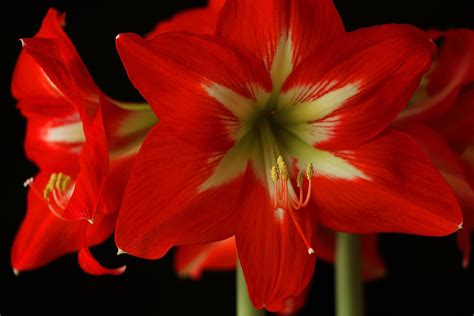
Day 28 Amaryllis Pulse: A Sijo

Happy Sunday everyone! Be good to your muse today! She has been very busy and mostly faithful!

After today’s Sijo, only two more days of the poem-a-day challenge. We are almost there!

Today’s poem is an adventure in counting syllables! And a learning experience.

Mine has 47 syllables, the lines are 16, 16, & 15. This traditional Korean verse form usually has three lines of 14-16 syllables, so I’m within the range. (It is pronounced SHEE-jo.) It’s a little more complicated than just the syllables, so check it out, if you want to know more. I found an excellent guide from Koreanquartly.org—A basic guide to writing sijo, in case you want to try writing one.

The Prompt behind the Poem:

Napowrimo.net: Finally, our optional prompt for the day asks you to try your hand at writing a sijo. This is a traditional Korean verse form. A sijo has three lines of 14-16 syllables. The first line introduces the poem’s theme, the second discusses it, and the third line, which is divided into two sentences or clauses, ends the poem – usually with some kind of twist or surprise.

You could also write a sijo in six lines – at least when it comes to translating classical sijo into English, translators seem to have developed this habit, as you can see from these translations of poems by Jong Mong-Ju and U Tak.

Take a look at this energetic group of women, HerBeat, playing traditional Korean drums! What a pulse of energy like the Amaryllis!!

HerBeat, Korean Women Drummers

Poet, writer, painter, and player of music, I love to express myself and invite your visits and comments to my site. Jacquelyn View all posts by Poet Voice