Today’s prompt from Napowrimo.net asked us to get inspired by stamps!
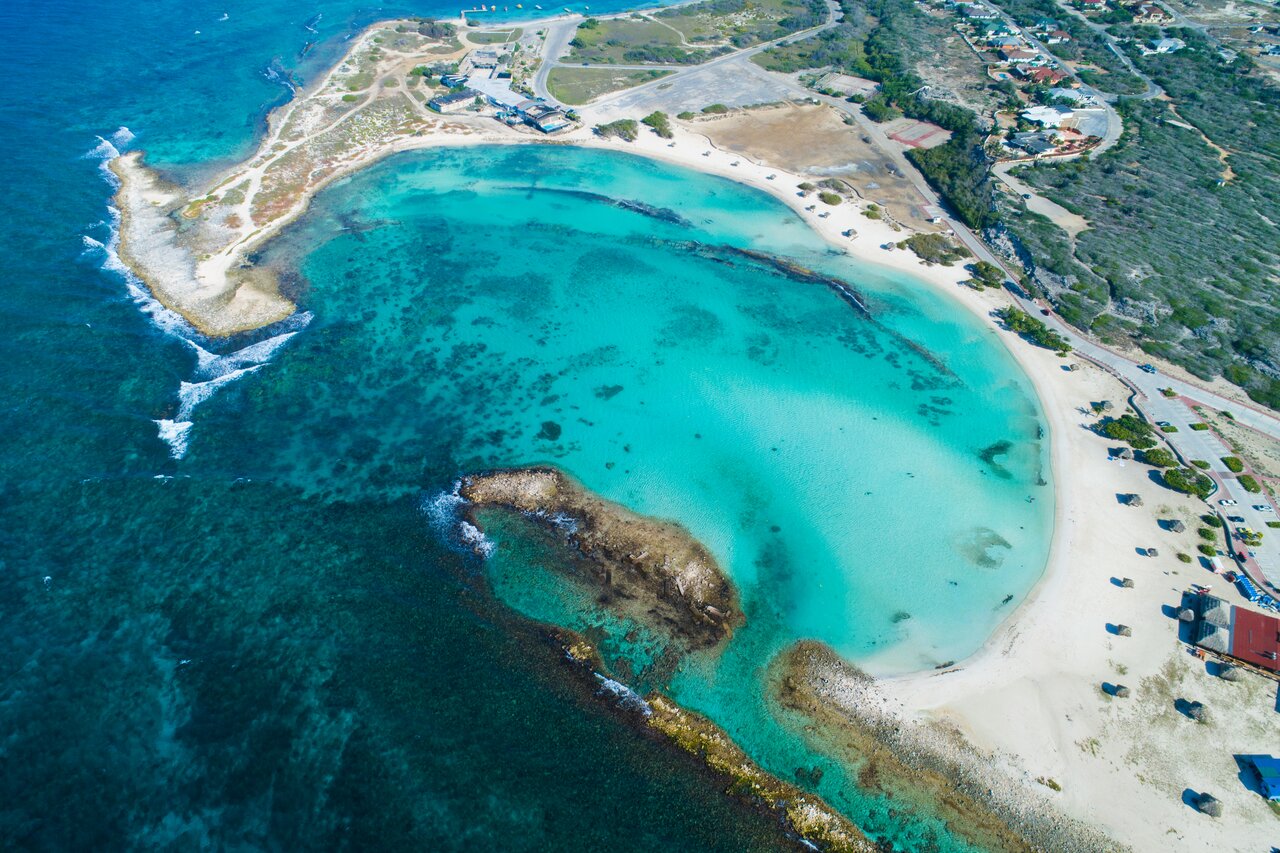
It took me awhile as first I went to the National Postal Museum and there was so much to learn! Next, I tried the recommended @StampsBot. Like Maureen said, there was an amazing “wide, wonderful, and sometimes wacky world of postage stamps” out there! But, still, difficult to zero in on just one. Curious how many stamps from other countries feature cats. I don’t recall any US stamps giving cats so much attention. In the end, though, it was this gorgeous palm tree and sunset that caught my eye. And now, I want to go to Aruba!
It also reminded me of a painting I did en plein air, years ago on a nearby beach. I gave it as a wedding gift to some dear friends.
Poet’s painting of island sunset.
And here is my little poem inspired by this lovely stamp from Aruba:
Napowrimo.net Prompt: Today’s (optional) prompt asks you to write a poem of at least ten lines in which each line begins with the same word (e.g., “Because,” “Forget,” “Not,” “If”). This technique of beginning multiple lines with the same word or phrase is called anaphora, and has long been used to give poems a driving rhythm and/or a sense of puzzlebox mystery. To give you more context, here’s an essay by Rebecca Hazelton on her students’ “adventures in anaphora,” and a contemporary poem that uses anaphora to great effect: Layli Long Soldier’s “Whereas.”
Can empathy change our world? Can poetry create empathy? I believe the answer to these questions is yes. I would like to share a poem with you that attempts to create empathy for one little island girl who is forced to leave her home–just one of the many stories from my work in progress, Bikini Laments.
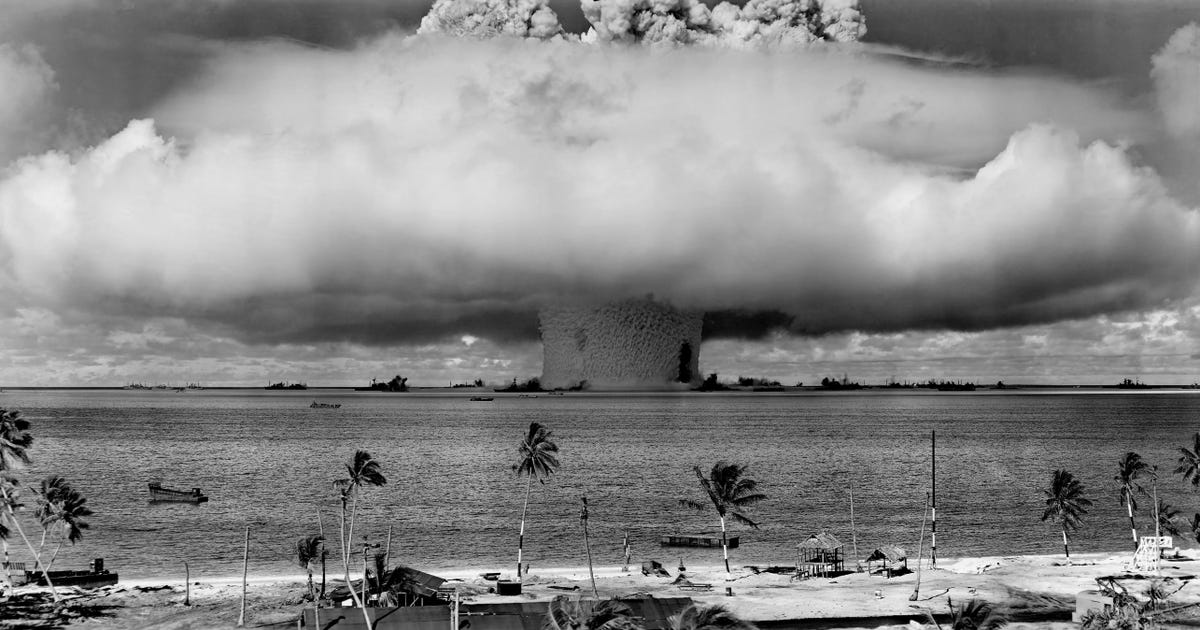
Bikini Laments (and Rainbow Warrior, the shorter collection that includes some Bikini Atoll poems) is a series of poems about the impact of atomic testing on the South Pacific islands. The short 1946 film below gives some background on this atomic testing that occurred in the 1940s and 1950s.
My poetry in this collection attempts to create empathy for those whose life and culture on Bikini Atoll were lost. “A Child Speaks to Libokra” tells the story of one little island girl taken from her home as I imagined it. One of the poems from Rainbow Warrior(Finishing Line Press, 2023), it was first published by Hawaii Pacific Review as you see it here.
The shocking story of Bikini Atoll & the Atomic Testing in a brief film:
According to Psychology Today, “Empathy is a sense that you can understand and share the feelings of another.” As I wrote “A Child Speaks to Libokra,” I became the child. I felt I was leaving my palm trees, my sister’s grave, and my simple home behind to board a big ship to the unknown.
In “Myth of the Infinite Sea,” also from Rainbow Warrior, the poet/reader becomes Eagle, hopefully to create empathy for the avian world that experiences oil on the water (specifically, in this poem, the Deepwater Horizon oil spill).
Could our world be saved from violence, war and environmental disasters with more empathy?
If so, I want to do all I can to encourage empathy with my art.
October was as full as its Harvest Moon as it always is in our part of the world after the heat breaks.
I have missed my interaction with friends and readers at Poet Voice, but I am back!
Some of my time was devoted to the 8th Annual Pat Conroy Literary Festival, held every year around the late Pat Conroy’s birthday. I was fortunate this year to take part in a Poets Panel with the amazing sister and fellow poets, Ellen Malphrus, Jennifer Bartell Boykin, and Tim Conroy. What an honor!
Though I was away from Poet Voice for a bit, I also vowed to keep hope alive in my own way with a poem, proving that “poetry matters,” the topic of the poets panel I referred to above.
Over time, my most popular blog post was in April during the poem-a-day challenge in honor of National Poetry Month. I wrote and posted “Yellow Celosia of Hope” which was chosen by Maureen Thorson as featured poem of the day on April 27, 2023. (There are many ways to participate in the annual Poem-a-day Challenge; I have been enjoying the camaraderie and prompts on NaPoWriMo, founded by Maureen.
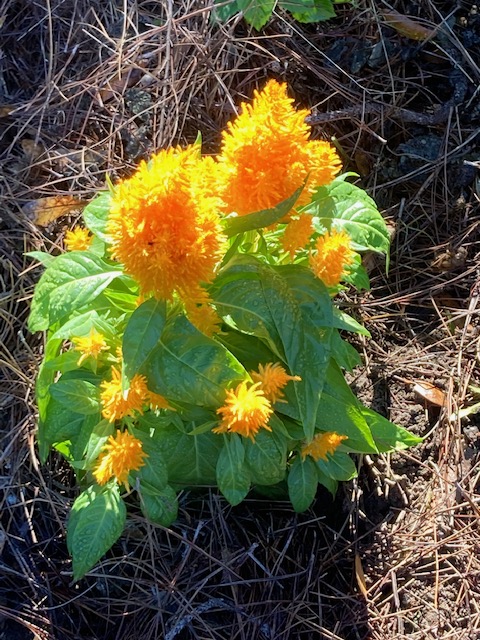
On the April day that I wrote the poem, I did plant a yellow Celosia with “golden feathers,/hope waving from my garden.”
Alas, the hottest summer ever was hard on the beautiful yellow feathery thing! And now, the world over, we need hope more than ever, so I planted two yellow celosias in my fall garden. They are annuals, but in warmer climates may act like a perennial. I will nurture them and replace the symbol of hope as needed. Here again, is the poem:
Yellow Celosia of Hope
I lose hope when the world
loses compassion.
I lose hope when I lose myself or
a belief in the invisible.
I lose hope when I don’t see
love, a solution, or an end.
When I lose hope,
I listen for my heartbeat.
I listen for the wren
announcing dawn.
I look for pinpoints of light
sparkling on the river,
galaxies in the dark sky.
When I lose hope,
I listen to music—loud.
I read the poets, I eat, I drink,
I pace, I cry, I imagine
hope returning.
I cook rice.
I bake biscuits.
I sweep the floor.
I plant Yellow Celosias,
golden feathers,
hope waving from my garden.
Jacquelyn Markham
Dear readers and friends, what ways do you keep hope alive in your lives?
Can we all envision peace together and make a difference as Baba Jolie suggests in her 11/11 portal pick-a card-short video?
Baba Jolie speaks of envisioning peace together
And poets, if you believe as poet Denise Levertov (1923-1997) wrote in her poem, “Making Peace,” that “poets must give us imagination of peace,” then please fire up your imaginations like this Flamma Golden Celosia and let it burn with hope for world peace and harmony in our everyday lives.
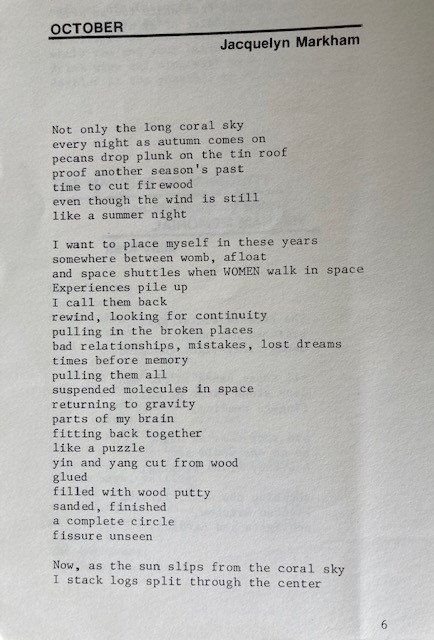
The South Florida Poetry Review, Winter 1985-a black and white view of the old slave quarters I rented from a tobacco farmer, Concord, Florida“October”
Now that Autumn Equinox has come and gone, days will be shorter and nights longer. More time to read, write, and play music through the night! Or, more time to harvest and put away jars of vegetables.
With the cooler temperatures, the winds of change blowing through the oak trees, and acorns dropping on the tin roof, I was reminded of a poem I wrote long ago, “October”–one of two of the first poems I ever published. I was living in a very old cabin, reportedly a former slave quarters, in a community in north Florida, 30 miles from the university where I was working on my doctorate in creative writing and poetry.
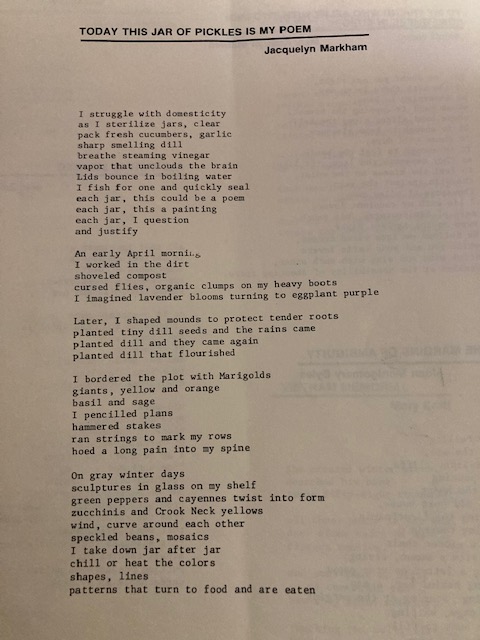
Although I lived in north Florida, the two poems were published in The South Florida Poetry Review, Hollywood, Florida. Sadly, the journal is now extinct though the Florida poetry scene is still vibrant. “Today This Jar of Pickles is My Poem,” which eventually became the title of a prize winning chapbook, was also published in this review. Now, understand, I was at the time growing food and also putting it up in jars for the future. At the time, I believe only 2 % of the population canned their own food and I was among them. Still, I questioned the time taken away from my creative projects.
Last line in second stanza became my dissertation title: “Lavender Blooms Turn Eggplant Purple”
Covid changed all that!
According to garden pals, “The Covid pandemic created 18.3 million new gardeners, most of whom are millennials.”
Check out these amazing statistics about new interest in gardening! That’s good news! What about you?







 Poet Voice