Lunatics

Getty image, courtesy of http://www.popsugar.com

Prompt for Day 13 from NaPoWriMo:

Also, the short version below:

…here’s our prompt for the day (optional, as always). Donald Justice’s poem, “There is a gold light in certain old paintings,” plays with both art and music, and uses an interesting and (as far as I know) self-invented form. His six-line stanzas use lines of twelve syllables, and while they don’t use rhyme, they repeat end words. Specifically, the second and fourth line of each stanza repeat an end-word or syllable; he fifth and sixth lines also repeat their end-word or syllable. Today, we challenge you to write a poem that uses Justice’s invented form.

I found that the lines in Justice’s invented form varied from ten to thirteen syllables rather than always 12 syllables, soI did the same with my response and varied line length.  Also, I wrote only one stanza of the required six lines as no length was set. Perhaps more to come!

Lunatics

Out from the rivered horizon the moon glows pink-gold.

We waited, yet nearly missed, as in silence it rose.

Across the way, the sunset in a sky of color,

a backdrop of azure splashed in red & rose.

On earth, our moods feel the presence of the moon.

All night, we cha-cha in the light of the moon.

Jacquelyn Markham© (4/13/2025)

Courtesy of wisdomofthespirit.com

Enjoy exploring the spiritual meaning, symbolism and astrology of the April’s pink moon:

How to Get the Most Out of April’s Pink Moon, According to an Astrologer by popsugar.com

Pink Moon Spiritual Meaning & Symbolism by wisdomofthespirit.com

Thanks for visiting me at Poet Voice, thinking about poetry everyday!

Day 30 Heliodora: Gift of the Sun

What a wonderful time I have had with Maureen Thorson’s final prompt for 2024 poem-a-day challenge: “And now for our last prompt of the year – optional, as always! Today, we’d like to challenge you to write a poem in which the speaker is identified with, or compared to, a character from myth or legend. . .” Partly because I have revisited one of my all time favorite poets, H.D. (Hilda Doolittle), modern American poet. Partly because I have learned more about Heliodora, the first known woman astrologer, ca. 2nd or 3rd century.

H.D., as a young poet, courtesy Poetry Foundation
https://www.poetryfoundation.org/poets/h-d

Heliodora: Gift of the Sun

for H.D., priestess/poet

Heliodora, gift of the sun,

Heliodora, astrologer, were you

the only one?*

You charted Saturn, Mercury & Venus,

on papyrus positioned Jupiter & Mars. 

Heliodora, you prophesied births &

guided lovers by planets, by sun.

Heliodora, oracle of constellations,

the moon and its phases. You foretold

mysteries of eclipses, solar & lunar.

H.D., you, too, seeker & seer of mysteries,

poet/priestess, you divined

the memory of Heliodora.

Did she speak to you in a dream?

Did she prophesy in your “writing on the wall?”**

Did Heliodora appear in your “overmind?”

Heliodora, the ancient one,

send me a message through the stars,

the planets, the constellations,

Andromeda, Cygnus, Cassiopeia (the Queen)!

What do you seers foresee for me?

Jacquelyn Markham (4/30/2024)

Funerary Stele of Heliodora. Egyptian, 2nd–3rd CE***

*Archeology supports evidence of Heliodora, first known woman astrologer in the Greco-Roman world. **See Notes On Thought & Vision by H.D.

***Image of Heliodora courtesy of Missouri Museum of Art and Archeology

How a Spiral Garden Changed My Life

credit: returntoitnow.net

This story is a response to a question from Jeff Brown who on the SC Writers Association Facebook feed asked about our favorite piece of writing. I responded:

“I have never thought of having a “favorite piece” of my writing. I write it and it has a life of its own. But, I suppose it would have to be “Story Circle,” a little known and unpublished feminist choreopoem I wrote while at Wolfpen Writers Colony in Prostpect, Kentucky.”

That residency was a month long stay awarded by the Kentucky Women’s Foundation who continues to support women, for example, with the Sallie Bingham Award. That month at Wolf Pen literally changed my life.

So, while I was busy musing on Jeff’s first question, he asked how that experience changed my life. Now, that sent me down another spiral path and here is my musing on that question.

So, other than the obvious—a month away from responsibilities and camaraderie with other writers– it was a combination of cosmic experiences that changed me. Under the dark skies of Kentucky, bonfires throughout the night, a studio far from the living quarters (where my room overlooked a spiral garden), and a library of stimulating material all played a part.

The library belonged to Sallie Bingham, the founder of Ky Women’s Foundation and an amazing writer herself. All these experiences were catalysts for the choreopoem, “Story Circle,” in the vein of Ntozake Shange’s “For Colored Girls Who Considered Suicide When the Rainbow is Enuf.”

“Story Circle,” my original chorepoem, is about healing & transformation, so the writing of it was healing. Though I had been an advocate for women since the 70s, I began to focus on healing and empowerment in my life, writing, and advocacy.

Poet leading a healing chant in the 1990’s

So when I returned to Athens where I taught at The University of Georgia for 12 years, I was driving down the road when the words “Spiral Dynamics” came to me even though I didn’t know what they meant at the time.  Shortly, I founded Spiral Dynamics Women’s Resource and Cultural Exchange. In the 90s women’s studies programs were struggling to be born. Of course, I was on the steering committee for Women’s Studies courses at UGA, but wheels turn slowly in academia and I was impatient, so I founded Spiral Dynamics to promote women’s endeavors–in writing, art, music, and business.  Spiral Dynamics never technically become a nonprofit but I simply did whatever I wanted to do, for example, raising money to bring the powerful Luisah Teish, Yoruban priestess to town. It was a memorable time to those who attended with Teish (as she likes to be called) leading us in healing and ceremony.

Spiral Dynamics was quite dynamic for years until it was time to transform the energy into something new. I was hired to implement an SBA grant for a women’s business center, coming full circle since the job was back in Kentucky! I was not an MBA; I was a poet and a professor, but by virtue of my work with women’s businesses through Spiral Dynamics, I was hired. I cut my ties with Georgia and headed into a completely different chapter of my life all from the vision of the spiral garden under my window at the Hopscotch House (Wolf Pen Writers Colony).

And that’s the short story! To be continued in my memoir.

Day 28  Index poem    PAD 2023

Before we delve into day 28, I want to say that I am so excited to have been selected as featured poet for Day 27 by Maureen, the matrixmind of the Napowrimo site for my “Yellow Celosia of Hope” poem. Thank you Maureen! So happy I have persevered and wrote the poem as well as planted my Celosia in the garden yesterday (I really did!)!

Now, I’ve written a slightly playful, fairly esoteric poem in response to day 28 prompt. I used the interesting index in my old poetry handbook from a time when books still had an extensive index, copyright 1940! For those who would like a definition of the term consonance, here’s one from the poetry foundation.  I include one snippet from my index that inspired me.

A consonance to death

Did the Daemon Lover have dactyl words and feet?

Oh, no, he was just a daffy-down-dilly!

Villon’s Des Dames du Tempts Jardis would

not have a thing to do with that dilly!

“I can understand that,” said the

Daughter of the North as she danced  away

to “Danty Baby Danty”!

No worries, the Earth Turn South

by morning, if we can make it

through the night despite Eidolons

lurking over the bed. Eidolons—

Eidolons? Eidolons! Is there

an echo in here? No, it’s only

the baby’s Echolalia.

Yes, a baby, no death,

perhaps a consonance to death

will do, bath, myth, broth

or sleuth will suffice!

No death, just truth, after all,

it’s the end of a perfect day!

            Jacquelyn Markham (4/28/2023)

Day 20 Found by a Future Scientist PAD 2023

To appease my grumbling muse, I decided to delve into a stanza pattern to write today’s poem.  The “Terza Rima” (a poem with interweaving rhyming triplets or tercets) is a form that poets have used for long poems or as a stand alone short 3 line poem.  One famous example of Terza Rima with three tercets and a final couplet is Shelley’s of “Ode to the West Wind.” It has a specific rhyme pattern that goes like this: 1,2,1; 2,3,2; 3,4,3;4,5,4 and the couplet uses the rhyme sound from the central line of the preceding triplet, so it goes 5, 5.

Shelley’s poem has five sections, however, and you may want to check it out here.

Below is my poem, “Found by a Future Scientist,” that responds to Napowrimo’s prompt “Have you ever heard someone wonder what future archaeologists, whether human or from alien civilization, will make of us? Today, I’d like to challenge you to answer that question in poetic form, exploring a particular object or place from the point of view of some far-off, future scientist? The object or site of study could be anything from a “World’s Best Grandpa” coffee mug to a Pizza Hut, from a Pokemon poster to a cellphone.”

Found by a Future Scientist

What thing is this,

a pendulum moving to and fro

in perfect rhythm, yet tedious?

The weighted piece—a rod of sorts—must go

ticking, tocking, ticking, tocking torture.

My science sees no purpose in this show.

Back and forth ticking I must endure

as I study this strange artifact.

In this task, my expertise looks amateur.

Yet, after hours, days, months—to be exact,

I warm to this past piece as treasured bric-a-brac.

            Jacquelyn Markham (4/20/2023)

Day 14 Parody or Satire Rewrite    PAD 2023

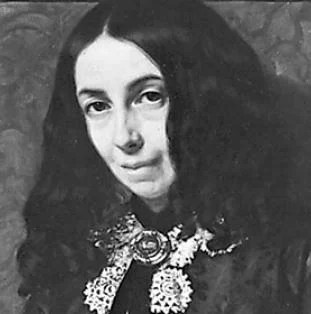
Elizabeth Barrett Browning (poets.org)

Today’s prompt is another rewrite.  Thorson says: “And now for our (optional) daily prompt. Hopefully, this one will provide you with a bit of Friday fun. Today, I challenge you to write a parody or satire based on a famous poem. It can be long or short, rhymed or not. But take a favorite (or unfavorite) poem of the past, and see if you can’t re-write it on humorous, mocking, or sharp-witted lines. You can use your poem to make fun of the original (in the vein of a parody), or turn the form and manner of the original into a vehicle for making points about something else (more of a satire – though the dividing lines get rather confused and thin at times).”

My attempt at the prompt on day 14 has an interesting twist. The poem is not so famous, but the poet is—Elizabeth Barrett Browning.  In 1856, Barrett Browning published Aurora Leigh, a “novel in verse” that follows the title character, an aspiring poet, through several pot-boiling twists. In one revealing passage, Aurora’s cousin and would-be suitor, Romney Leigh, summarizes his attitude toward her and women writers of that era in a passage that I quote below. I rewrote that passage.

So, I rewrote the poem from a feminist perspective and titled it “Woman Poet Extraordinaire”

Woman Poet Extraordinaire

Therefore, this same world

that you understand and influence

with your strength and courage will

always be changed by you and  

women of the world. Women brave,

strong, and at work in the world

will always change it by their very presence.

You are more than a doting mother and a wife!

You are more than a sublime Madonna ,

a seductress, or an enduring saint.

You are divine!

You are woman!

You are leader, artist, writer,

inventor, healer, builder.  

You are poet extraordinaire!

            Jacquelyn Markham (4/14/2023)

Here’s the original in which her cousin addresses her, knowing of her aspirations to be a poet:

Therefore, this same world
Uncomprehended by you must remain
Uninfluenced by you. Women as you are,
Mere women, personal and passionate,
You give us doting mothers, and chaste wives.
Sublime Madonnas, and enduring saints!
We get no Christ from you,—and verily
We shall not get a poet, in my mind.

The Poetry Foundation explains: “As starkly sexist as the above passage might seem to contemporary readers, the idea that women and female experience were incompatible with poetry continued to hold sway for the next 100 years, until second-wave feminism of the 1960s and 1970s brought a political and cultural watershed. Women fought for equal treatment and civil rights; meanwhile, women poets created structures to support one another while profoundly changing poetry itself.” (www.poetryfoundation.org)

We only have to look at the last two United States Poet Laureates to see “women poets extraordinaire”! Currently, Ada Limon and former, Joy Harjo. Two of my favorite poets.

Thinking about poetry and peace

Denise Levertov, has said in “Work and Inspiration: Inviting the Muse,” that “poems come into being in two ways.” She goes on to say, there are those poems that are “inspired” and those much more common, poems created by the poet’s conscious process that eventually leads to “unpredictable inspiration.” I have experienced both, but as she says, we would not write many poems if we only counted on the “given” or inspired poems. Instead, most often, we must mine the gold!

Levertov said to think about poetry everyday, and I try to follow her words. Today, I am revisiting an earlier blog post and thinking not only about poetry, but about PEACE.

I am sharing with you her poem, “Making Peace.”

Making Peace

By Denise Levertov

A voice from the dark called out,

             ‘The poets must give us

imagination of peace, to oust the intense, familiar

imagination of disaster. Peace, not only

the absence of war.’

                                   But peace, like a poem,

is not there ahead of itself,

can’t be imagined before it is made,

can’t be known except

in the words of its making,

grammar of justice,

syntax of mutual aid.

                                       A feeling towards it,

dimly sensing a rhythm, is all we have

until we begin to utter its metaphors,

learning them as we speak.

                                              A line of peace might appear

if we restructured the sentence our lives are making,

revoked its reaffirmation of profit and power,

questioned our needs, allowed

long pauses . . .

                        A cadence of peace might balance its weight

on that different fulcrum; peace, a presence,

an energy field more intense than war,

might pulse then,

stanza by stanza into the world,

each act of living

one of its words, each word

a vibration of light—facets

of the forming crystal.

Denise Levertov, “Making Peace” from Breathing the Water. Copyright © 1987 by Denise Levertov. Reprinted by permission of New Directions Publishing Corporation.

Source: Breathing the Water (New Directions Publishing Corporation, 1987)

https://www.poetryfoundation.org/poems/53900/making-peace