“Friday is here, and so is the fifth day of Na/GloPoWriMo.
Now, let’s get to our optional prompt! Today we’d like you to start by taking a look at Alicia Ostriker’s poem, “The Blessing of the Old Woman, the Tulip, and the Dog.” Now try your hand at writing your own poem about how a pair or trio very different things would perceive of a blessing or, alternatively, how these very different things would think of something else (luck, grief, happiness, etc).”
Today’s prompt from Napowrimo (thank you Maureen Thorson!): “Our (optional) prompt for the day challenges you to write a poem in which you take your title or some language/ideas from The Strangest Things in the World. First published in 1958, the book gives shortish descriptions of odd natural phenomena, and is notable for both its author’s turn of phrase and intermittently dubious facts.”
Because, truly, I do think it a little strange that the manatee, or its cousin the dugong, ever looked like a mermaid to the lonely sailors of the sea, I chose this idea from the “strangest things” book.
From the book, I chose the entry on “Mammal Prototypes of the ‘Mermaid’”
“The prototypes of the “mermaids” of legend are among the least known of all animals to naturalists because of their underwater habitat and their secretive habits. They are the manatees of the Caribbean region and the dugongs of the Indian Ocean. They constitute the only remaining species of the serenia, or moon creatures, distant relatives of the elephant. Both have a somewhat human facial appearance. They feed standing upright in the water, their flippers held out before them like arms. Sometimes the females hold their calves in these flippers. Seen from a distance, they have a curiously human appearance, which may account for the many reports of mermaids and mermen.”
And though, I think the sailors must have been hallucinating to spot a manatee or dugong and see a mermaid (less often a merman), I wrote my poem in response to this entry. And because I spent a good part of my day in the dentist office, I decided to write a short poem, called a Triolet.
Not sure that was a timesaver, but here’s my triolet and poem for day 4. That intricate rhyme scheme with two refrains is a challenge indeed!
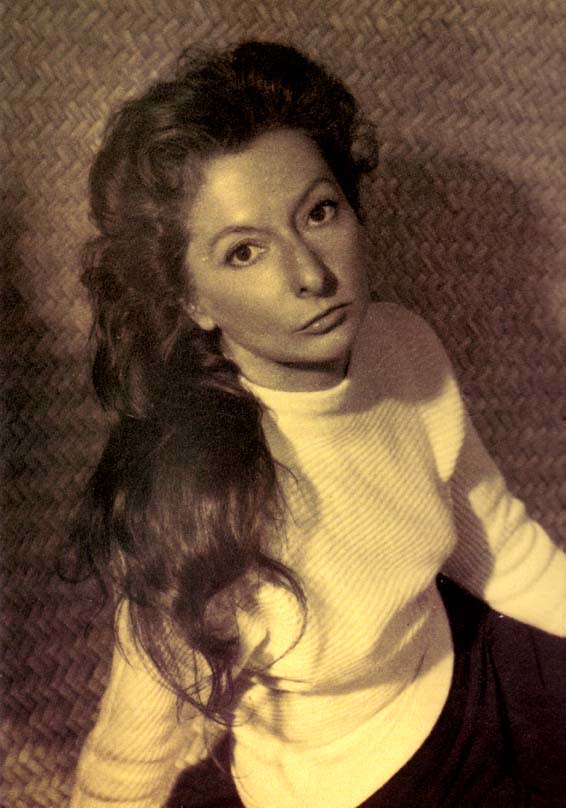
“The dream world and the real world are the same.” (Remedios Varo)
Image Credit: National Galleries of Scotland
Today, Napowrimo has challenged me to write a surreal prose poem. Wonderful! It gave me the opportunity to do what I love to do–learn more about women artists, in this case, surreal women artists of Mexico. Check out this article in Art News if you would like to learn more about this intriguing artist, Remedios Varo and her artist friends.
And here is my prose poem for today:
Encounter (Encuentro)
The artist encounters her past self. Remedios tips open the lid of the coffin-like box & haunting eyes peer out. She does not look in. She seems uninterested in the self of her past soon to be on the shelf with the others. Her cape flows blue-gray and ragged, and even her skeletal fingers poise ready, but her new self has yet to be revealed. The artist gazes beyond now. She encounters life, death, and transformation as she waits to drop the lid on her old self. Who is the new Varos she sees in the distance?
Jacquelyn Markham (4/3/2024)
Remedios Varos, artist 1908-1963
I really appreciate that the National Gallery of Scotland is acquiring more works by women surrealists. And always, much credit goes to the National Museum of Women in the Arts for its contributions to women’s art. Thank you NMWA for featuring Varos in exhibits and events and for all you do for women in the arts!
Jacquelyn Markham, poet & writer, author of Rainbow Warrior, Finishing Line Press (2023), Peering Into the Iris: An Ancestral Journey and China Baby, among other titles. She offers writing & creativity guidance through Moonflower Mentoring.
Here we go, poets and poetry lovers! Day one of the poem-a-day challenge and National Poetry Month! So exciting! Read more about it here.
Prompt: Write, without consulting the book, a poem that recounts the plot, or some portion of the plot, of a novel that you like but haven’t read in a long time (compliments of NaPoWriMo)! My today’s effort below.
Ocean moon, photo by the poet
Edna & the Sea
When Edna left the shore &
plunged into the salty blue,
her body slid through breaking waves,
a silvery fish, sunlight flashing freedom.
When Edna left the shore behind
she lost everything—except herself.
When she left the shore, she found herself,
as solid as a whale, breathing air in bursts,
then diving deep, deep, deep into the azure sea.
When Edna returned to
her city home, everything she lost
was there—Victorian rooms, silver trays
with calling cards, tea sets, & callers at the door,
but where was she?
Edna felt the pull of the ocean,
slipped from the shallow talk & society,
she felt the waves wash her ankles,
a moment’s hesitation before the plunge,
like a fish freed from the hook,
frolicking in viridian sea, its escape barely seen.
Jacquelyn Markham 4/1/2024
This plot poem is inspired by Edna Pontellier in Kate Chopin’s The Awakening. If you haven’t read the book, you are missing a classic novel that reveals so much about the lives of women in the 19th century. And frankly, even into the 20th (and maybe even today for some women), Chopin’s words can evoke a “tower moment.”
“Pick a word from the list below. Then write a poem titled either “A [your word]” or “The [your word]” in which you explore the meaning of the word, or some memory you have of it, as if you were writing an illustrative/alternative definition.” The list:
Cage
Ocean
Time
Cedar
Window
Sword
Flute
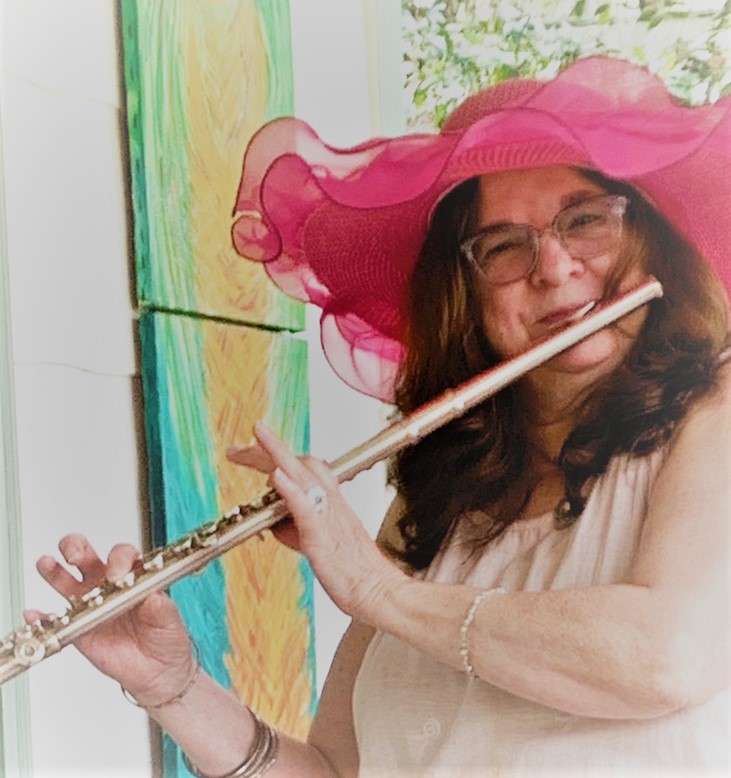
Of course, as a flutist, I certainly must select “flute”!
October was as full as its Harvest Moon as it always is in our part of the world after the heat breaks.
I have missed my interaction with friends and readers at Poet Voice, but I am back!
Some of my time was devoted to the 8th Annual Pat Conroy Literary Festival, held every year around the late Pat Conroy’s birthday. I was fortunate this year to take part in a Poets Panel with the amazing sister and fellow poets, Ellen Malphrus, Jennifer Bartell Boykin, and Tim Conroy. What an honor!
Though I was away from Poet Voice for a bit, I also vowed to keep hope alive in my own way with a poem, proving that “poetry matters,” the topic of the poets panel I referred to above.
Over time, my most popular blog post was in April during the poem-a-day challenge in honor of National Poetry Month. I wrote and posted “Yellow Celosia of Hope” which was chosen by Maureen Thorson as featured poem of the day on April 27, 2023. (There are many ways to participate in the annual Poem-a-day Challenge; I have been enjoying the camaraderie and prompts on NaPoWriMo, founded by Maureen.
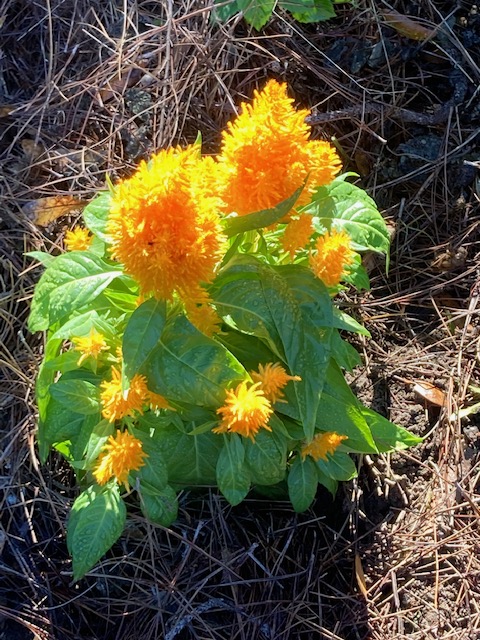
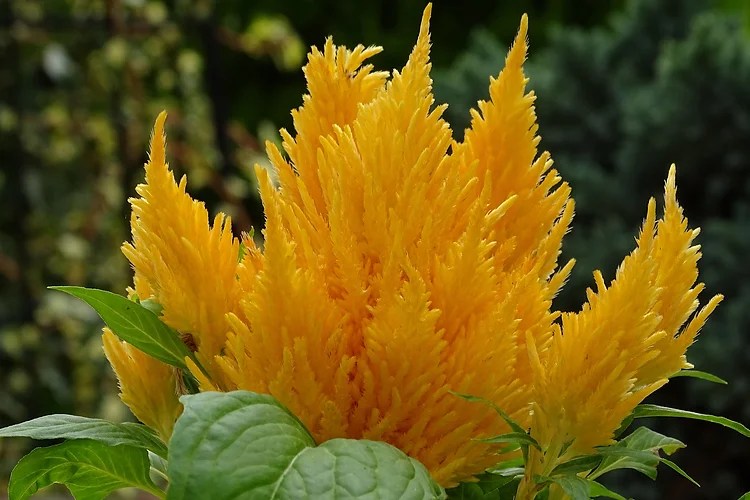
On the April day that I wrote the poem, I did plant a yellow Celosia with “golden feathers,/hope waving from my garden.”
Alas, the hottest summer ever was hard on the beautiful yellow feathery thing! And now, the world over, we need hope more than ever, so I planted two yellow celosias in my fall garden. They are annuals, but in warmer climates may act like a perennial. I will nurture them and replace the symbol of hope as needed. Here again, is the poem:
Yellow Celosia of Hope
I lose hope when the world
loses compassion.
I lose hope when I lose myself or
a belief in the invisible.
I lose hope when I don’t see
love, a solution, or an end.
When I lose hope,
I listen for my heartbeat.
I listen for the wren
announcing dawn.
I look for pinpoints of light
sparkling on the river,
galaxies in the dark sky.
When I lose hope,
I listen to music—loud.
I read the poets, I eat, I drink,
I pace, I cry, I imagine
hope returning.
I cook rice.
I bake biscuits.
I sweep the floor.
I plant Yellow Celosias,
golden feathers,
hope waving from my garden.
Jacquelyn Markham
Dear readers and friends, what ways do you keep hope alive in your lives?
Can we all envision peace together and make a difference as Baba Jolie suggests in her 11/11 portal pick-a card-short video?
Baba Jolie speaks of envisioning peace together
And poets, if you believe as poet Denise Levertov (1923-1997) wrote in her poem, “Making Peace,” that “poets must give us imagination of peace,” then please fire up your imaginations like this Flamma Golden Celosia and let it burn with hope for world peace and harmony in our everyday lives.
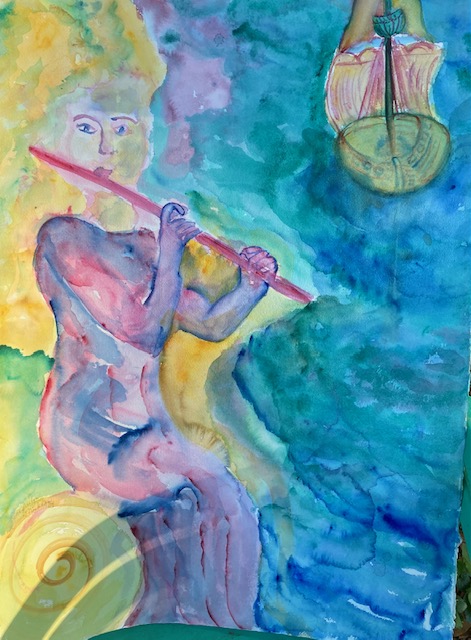
Siren Song, watercolor by poet, c. J. Markham, 2023
Hello loyal readers,
In the aftermath of the poem-a-day challenge, I want to add a few poems that slipped by with the fast pace of my literary life since my book Rainbow Warrior was released!
On Day 10 of the poem-a-day challenge, I was uninspired to write a “shanty” poem although many of my poet friends were loving it. No, it was not coming to me!
This was the prompt from Maureen at NaPoWrimo: “I’m playing to my own strengths here, but I challenge you to write a sea shanty (or shantey, or chanty, or chantey — there’s a good deal of disagreement regarding the spelling!) Anyway, these are poems in the forms of songs, strongly rhymed and rhythmic, that sailors might sing while hauling on ropes and performing other sea-going labors.”
Although some of my kindred poets were writing away, I just couldn’t imagine a poem/song to be sung while loading or unloading a ship, etc., so I slipped to day eleven and continued.
Now, I’ve decided to use a poem to the sea from an earlier time to make up my day 10 challenge! Below is the poem: “Offering to Yemanya.” Shout out to Ed Madden, in whose workshop I wrote this poem some years ago (sponsored by the Poetry Society of South Carolina).
“Painting my heart out”–acrylic painting by the poet
My poem for Day 30, the final poem of poem-a-day challenge, reflects a retraction of my position on disappointment in love put forward in many poems, including “Hyena,” (day 5); “Sonnet on Love,” (day 9); “Affairs of the Heart: Claims & Warnings,” (Day 16); and “somewhere i travelled beyond good sense,” (Day 25). As I retract my position on love, instead of bitterness and disappointment, I will reverse some of the lines from these poems. Why am I doing changing my tune? I am responding to the prompt below and writing a “palinode.”
Maureen’s prompt: “write a palinode – a poem in which you retract a view or sentiment expressed in an earlier poem. For example, you might pick a poem you drafted earlier in the month and write a poem that contradicts or troubles it. This could be an interesting way to start working on a series of related poems. Alternatively, you could play around with the idea of a palinode by writing a poem in which the speaker says something like “I take it back” or otherwise abandons a prior position within the single poem.”
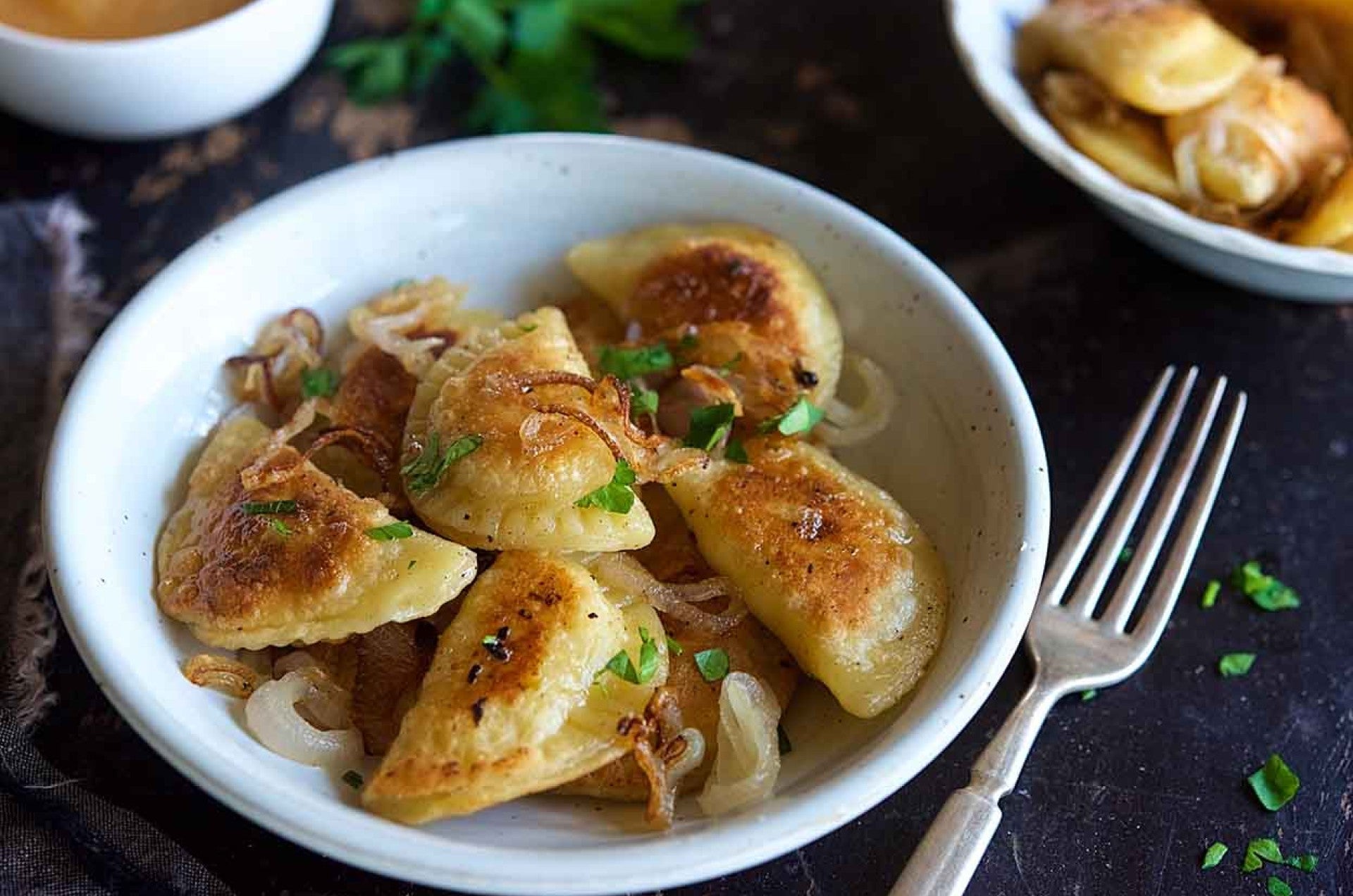
The prompt: “Start by reading Alberto Rios’s poem “Perfect for Any Occasion.” Now, write your own two-part poem that focuses on a food or type of meal. At some point in the poem, describe the food or meal as if it were a specific kind of person. Give the food/meal at least one line of spoken dialogue.”
In 2022, I was pleased to be featured by Maureen and Napowrimo with my poem “Kielbasa Speaks to the Vegetarian of Polish Descent,” so for this food poem, I wanted to stay with the Polish theme and Pierogis came to mind. Here’s what came out of my meditation on Pierogis! I wish I had some sizzling in butter right now!
Poem removed by Poet Voice for revision and publication elsewhere.
Before we delve into day 28, I want to say that I am so excited to have been selected as featured poet for Day 27 by Maureen, the matrixmind of the Napowrimo site for my “Yellow Celosia of Hope” poem. Thank you Maureen! So happy I have persevered and wrote the poem as well as planted my Celosia in the garden yesterday (I really did!)!
Now, I’ve written a slightly playful, fairly esoteric poem in response to day 28 prompt. I used the interesting index in my old poetry handbook from a time when books still had an extensive index, copyright 1940! For those who would like a definition of the term consonance, here’s one from the poetry foundation. I include one snippet from my index that inspired me.