Poet Voice here, aka Jacquelyn Markham, poet. Welcome back to Poet Voice!!
Already participating in the Stafford Challenge (writing a poem a day all year), I am now overlapping with National Poetry Month, or as we know at Napowrimo.net, it is actually Na/GloPoWriMo (National/Global Poetry Writing Month)! Poets participate from all over the globe! Won’t you join us?
Napowrimo.net founder Maureen Thorson explains: “Each day, you’ll find here a new featured participant and daily resource. We’ll also have an optional daily prompt for those of you who find yourself in need of a little inspiration (or just like the additional challenge).” There are other sites, too, that provide prompts or you can simply begin on your own! Thank you Maureen (who founded Napowrimo in 2003!!) for your dedication to poets and National Poetry Month!
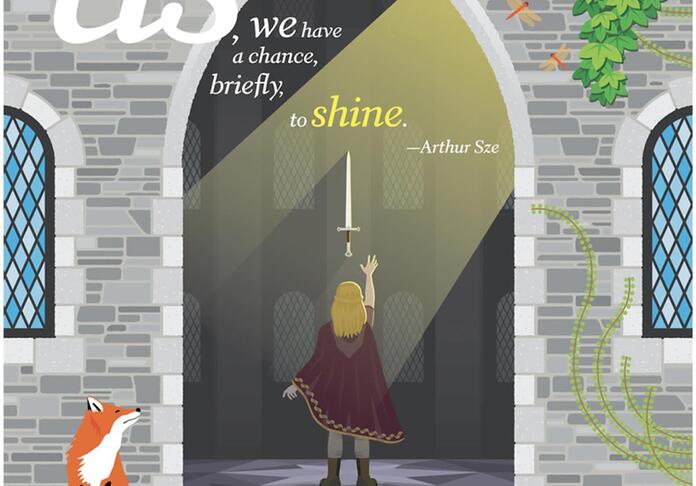
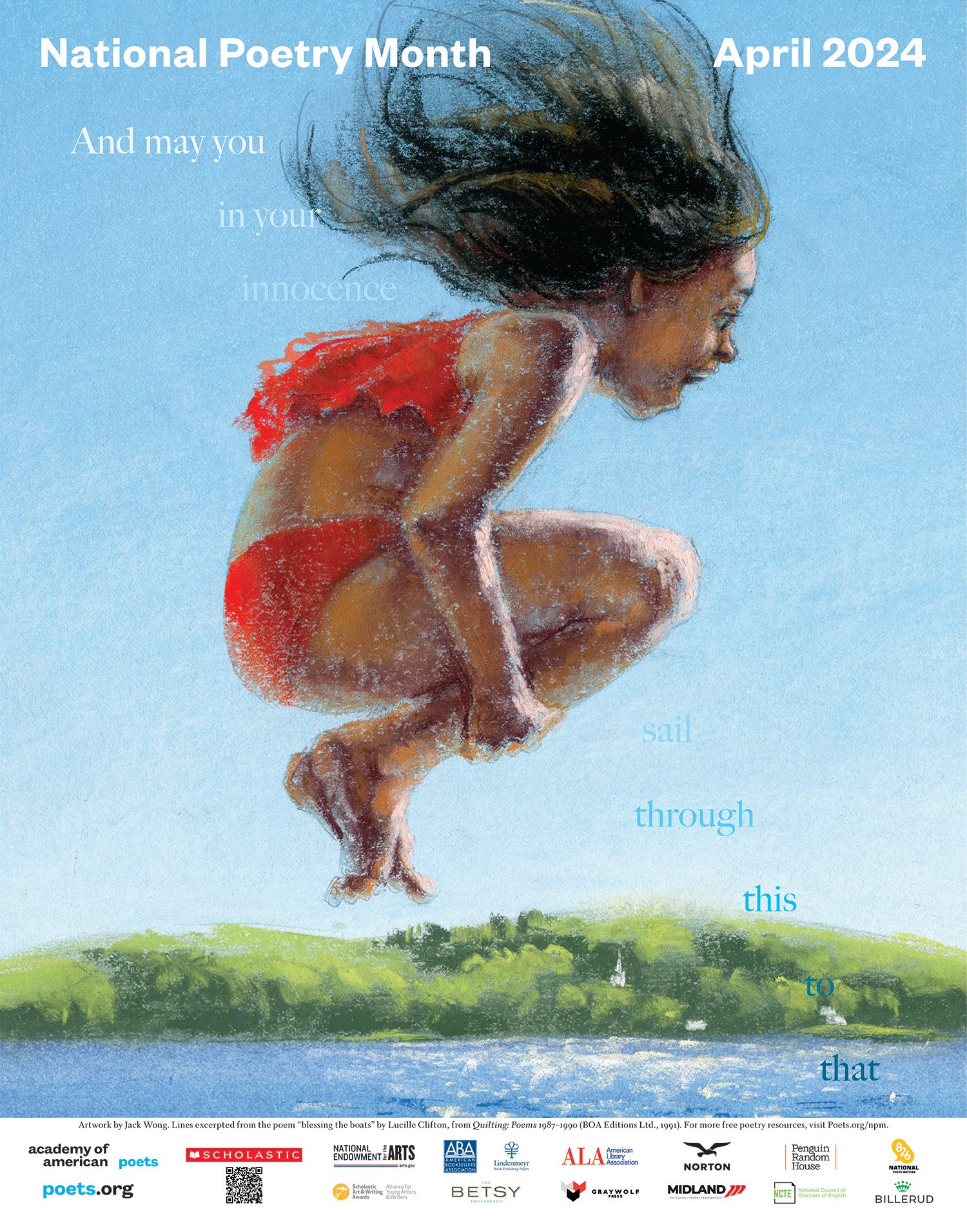
Happy 30th birthday to National Poetry Month, launched in 1996 by the Academy of American Poets! Below is this year’s poster, graced with words by our current U. S. Poet Laureate, Arthur Sze.
Rather than sharing my newly created poem from today, I am sharing a poem I wrote in another year during National Poetry Month.
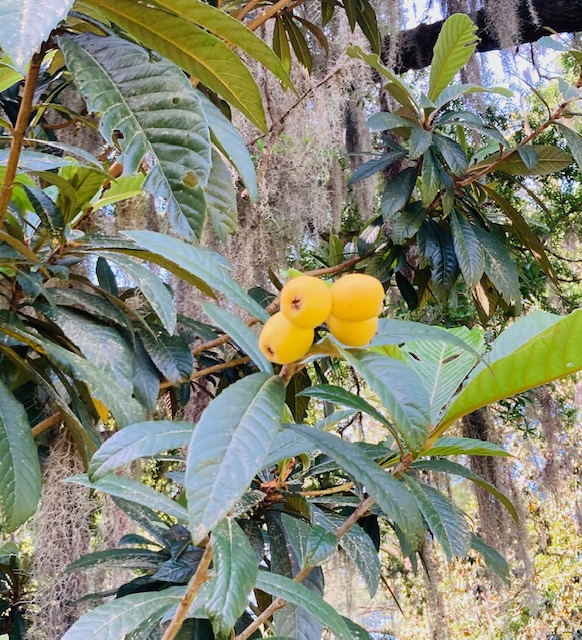
“Taste of Sun: Eriobotrya japonica” was published by Petigru Review. Proof Poem-a-day can be productive! Enjoy!
Today’s challenge was “to write a poem that involves music at a ceremony or event of some kind.” Click (NaPoWriMo) for all the details about the Day 28 prompt. Only two more days of the poem-a-day challenge and National Poetry Month!
And here’s my offering for the Day 28 challenge about music at a ceremony. In this case, my own experiences playing music for weddings!
Although we were given the opportunity to write a “loose” villanelle today, I went with the traditional rhyme scheme. You will find the rules for this form linked below, courtesy of the Academy of American poets.
From NaPoWriMo, my favorite poem-a-day challenge website, Maureen Thorson offered this optional prompt: “Take a look at Kyle Dargan’s “Diaspora: A Narcolepsy Hymn.” This poem is a loose villanelle that uses song lyrics as its repeating lines (loose because it doesn’t rhyme). Your challenge is, like Dargan, to write a poem that incorporates song lyrics – ideally, incorporating them as opposing phrases or refrains.”
From Nina Simone’s Song “For All We Know” from NinaSimone.com
This might only be a dream *first refrain Like the ripples, like the ripples in the stream *second refrain
Villanelle: A1 b A2 / a b A1 / a b A2 / a b A1 / a b A2 / a b A1 A2.
Today’s prompt from Napowrimo (thank you Maureen Thorson!): “Our (optional) prompt for the day challenges you to write a poem in which you take your title or some language/ideas from The Strangest Things in the World. First published in 1958, the book gives shortish descriptions of odd natural phenomena, and is notable for both its author’s turn of phrase and intermittently dubious facts.”
Because, truly, I do think it a little strange that the manatee, or its cousin the dugong, ever looked like a mermaid to the lonely sailors of the sea, I chose this idea from the “strangest things” book.
From the book, I chose the entry on “Mammal Prototypes of the ‘Mermaid’”
“The prototypes of the “mermaids” of legend are among the least known of all animals to naturalists because of their underwater habitat and their secretive habits. They are the manatees of the Caribbean region and the dugongs of the Indian Ocean. They constitute the only remaining species of the serenia, or moon creatures, distant relatives of the elephant. Both have a somewhat human facial appearance. They feed standing upright in the water, their flippers held out before them like arms. Sometimes the females hold their calves in these flippers. Seen from a distance, they have a curiously human appearance, which may account for the many reports of mermaids and mermen.”
And though, I think the sailors must have been hallucinating to spot a manatee or dugong and see a mermaid (less often a merman), I wrote my poem in response to this entry. And because I spent a good part of my day in the dentist office, I decided to write a short poem, called a Triolet.
Not sure that was a timesaver, but here’s my triolet and poem for day 4. That intricate rhyme scheme with two refrains is a challenge indeed!
Here we go, poets and poetry lovers! Day one of the poem-a-day challenge and National Poetry Month! So exciting! Read more about it here.
Prompt: Write, without consulting the book, a poem that recounts the plot, or some portion of the plot, of a novel that you like but haven’t read in a long time (compliments of NaPoWriMo)! My today’s effort below.
Ocean moon, photo by the poet
Edna & the Sea
When Edna left the shore &
plunged into the salty blue,
her body slid through breaking waves,
a silvery fish, sunlight flashing freedom.
When Edna left the shore behind
she lost everything—except herself.
When she left the shore, she found herself,
as solid as a whale, breathing air in bursts,
then diving deep, deep, deep into the azure sea.
When Edna returned to
her city home, everything she lost
was there—Victorian rooms, silver trays
with calling cards, tea sets, & callers at the door,
but where was she?
Edna felt the pull of the ocean,
slipped from the shallow talk & society,
she felt the waves wash her ankles,
a moment’s hesitation before the plunge,
like a fish freed from the hook,
frolicking in viridian sea, its escape barely seen.
Jacquelyn Markham 4/1/2024
This plot poem is inspired by Edna Pontellier in Kate Chopin’s The Awakening. If you haven’t read the book, you are missing a classic novel that reveals so much about the lives of women in the 19th century. And frankly, even into the 20th (and maybe even today for some women), Chopin’s words can evoke a “tower moment.”
To appease my grumbling muse, I decided to delve into a stanza pattern to write today’s poem. The “Terza Rima” (a poem with interweaving rhyming triplets or tercets) is a form that poets have used for long poems or as a stand alone short 3 line poem. One famous example of Terza Rima with three tercets and a final couplet is Shelley’s of “Ode to the West Wind.” It has a specific rhyme pattern that goes like this: 1,2,1; 2,3,2; 3,4,3;4,5,4 and the couplet uses the rhyme sound from the central line of the preceding triplet, so it goes 5, 5.
Shelley’s poem has five sections, however, and you may want to check it out here.
Below is my poem, “Found by a Future Scientist,” that responds to Napowrimo’s prompt “Have you ever heard someone wonder what future archaeologists, whether human or from alien civilization, will make of us? Today, I’d like to challenge you to answer that question in poetic form, exploring a particular object or place from the point of view of some far-off, future scientist? The object or site of study could be anything from a “World’s Best Grandpa” coffee mug to a Pizza Hut, from a Pokemon poster to a cellphone.”
Found by a Future Scientist
What thing is this,
a pendulum moving to and fro
in perfect rhythm, yet tedious?
The weighted piece—a rod of sorts—must go
ticking, tocking, ticking, tocking torture.
My science sees no purpose in this show.
Back and forth ticking I must endure
as I study this strange artifact.
In this task, my expertise looks amateur.
Yet, after hours, days, months—to be exact,
I warm to this past piece as treasured bric-a-brac.
The Academy of American Poets defines “Erasure poetry” as “a form of found poetry wherein a poet takes an existing text and erases, blacks out, or otherwise obscures a large portion of the text, creating a wholly new work from what remains.” (poets.org)
It seems to me that erasure poem could be considered a form of “negation”–the challenge of today’s prompt explained by Maureeen at Napowrimo: “Today’s prompt is a poem of negation – yes (or maybe, no), I challenge you to write a poem that involves describing something in terms of what it is not, or not like.”
Poem removed by Poet Voice for revision and publication elsewhere.
Today’s prompt is another rewrite. Thorson says: “And now for our (optional) daily prompt. Hopefully, this one will provide you with a bit of Friday fun. Today, I challenge you to write a parody or satire based on a famous poem. It can be long or short, rhymed or not. But take a favorite (or unfavorite) poem of the past, and see if you can’t re-write it on humorous, mocking, or sharp-witted lines. You can use your poem to make fun of the original (in the vein of a parody), or turn the form and manner of the original into a vehicle for making points about something else (more of a satire – though the dividing lines get rather confused and thin at times).”
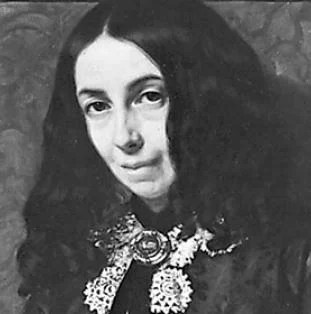
My attempt at the prompt on day 14 has an interesting twist. The poem is not so famous, but the poet is—Elizabeth Barrett Browning. In 1856, Barrett Browning published Aurora Leigh, a “novel in verse” that follows the title character, an aspiring poet, through several pot-boiling twists. In one revealing passage, Aurora’s cousin and would-be suitor, Romney Leigh, summarizes his attitude toward her and women writers of that era in a passage that I quote below. I rewrote that passage.
So, I rewrote the poem from a feminist perspective and titled it “Woman Poet Extraordinaire”
Woman Poet Extraordinaire
Therefore, this same world
that you understand and influence
with your strength and courage will
always be changed by you and
women of the world. Women brave,
strong, and at work in the world
will always change it by their very presence.
You are more than a doting mother and a wife!
You are more than a sublime Madonna ,
a seductress, or an enduring saint.
You are divine!
You are woman!
You are leader, artist, writer,
inventor, healer, builder.
You are poet extraordinaire!
Jacquelyn Markham (4/14/2023)
Here’s the original in which her cousin addresses her, knowing of her aspirations to be a poet:
Therefore, this same world Uncomprehended by you must remain Uninfluenced by you. Women as you are, Mere women, personal and passionate, You give us doting mothers, and chaste wives. Sublime Madonnas, and enduring saints! We get no Christ from you,—and verily We shall not get a poet, in my mind.
The Poetry Foundation explains: “As starkly sexist as the above passage might seem to contemporary readers, the idea that women and female experience were incompatible with poetry continued to hold sway for the next 100 years, until second-wave feminism of the 1960s and 1970s brought a political and cultural watershed. Women fought for equal treatment and civil rights; meanwhile, women poets created structures to support one another while profoundly changing poetry itself.” (www.poetryfoundation.org)
We only have to look at the last two United States Poet Laureates to see “women poets extraordinaire”! Currently, Ada Limon and former, Joy Harjo. Two of my favorite poets.





 Poet Voice